
Review · GIZA
2 nights luxor,Aswan,abu simbel,balloon,red sea snorkeling from Cairo by plane
Abu Simbel at sunrise, a hot-air balloon over Luxor, a felucca on the Nile, and Red Sea snorkeling all fit into three very full days. This is less a relaxed holiday than a carefully packed introduction to southern Egypt, with private transfers and flights helping you cover ground quickly.
I like the range of experiences here. You get major ancient sites, a traditional sailboat, a camel ride, an early balloon flight, and time in the water, not just a parade of temples. I also like the door-to-door handling, with flights, first-class train tickets, hotel nights, meals, boats, and transfers bundled together.
The main consideration is pace. You may leave your Cairo hotel before dawn, spend much of the first day moving between Aswan and Abu Simbel, and finish with a long Red Sea outing. Entrance fees and tipping are extra, and the Safaga flight and transfer arrangements deserve confirmation before you pay.
Key points at a glance
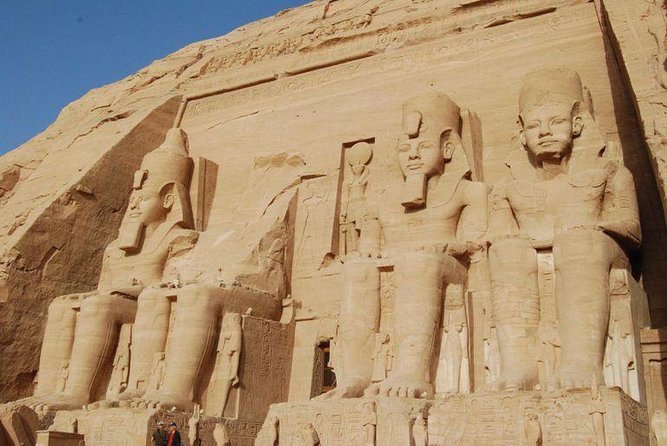
- Abu Simbel comes first: Fly from Cairo to Aswan, then make a private trip to Ramesses II and Queen Nefertari’s monumental temples.
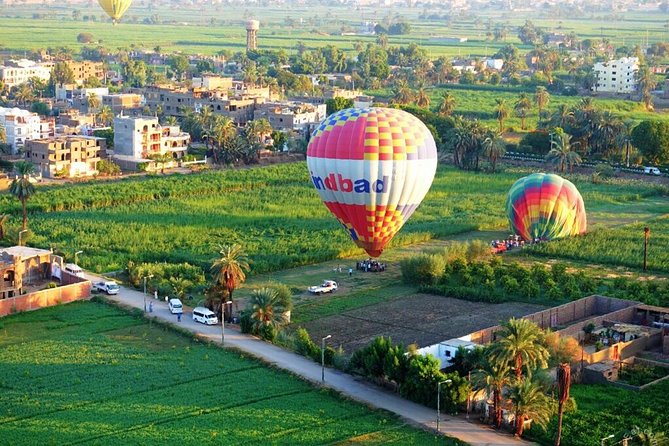
- Luxor gets the sunrise treatment: A hot-air balloon flight begins around 5:00 a.m., giving you a broad view of the Nile Valley and ancient monuments.
- The itinerary mixes famous sights with local transport: Ride a motorboat to Philae, take a first-class train to Luxor, and sail by traditional felucca.
- You cover more than archaeology: The program adds a camel ride, Banana Island, Carter House, and snorkeling near Safaga on the Red Sea.
- Private guiding matters: You have your own group and Egyptology guide. Mona is specifically named as an exceptional guide, while Haitham is praised for coordinating the experience.
- The $780 price buys convenience: Flights, two hotel nights, many transfers, meals, boats, equipment, and licensed arrangements are included, but site entrance fees are not.
What $780 buys you in three days
At $780 per person, this tour is priced as a high-convenience package rather than a budget sightseeing trip. The value comes from combining several costly and awkward pieces: domestic flights, a private Abu Simbel excursion, two nights at a Nile-view hotel in Luxor, a hot-air balloon flight, a Red Sea boat trip, and numerous ground transfers.
You also receive breakfast for two mornings and three listed lunches. The first lunch is at a local restaurant in Aswan, the second is a typical Egyptian meal during the felucca outing, and the third is served during the snorkeling day. Those meals save you from arranging food during a tight schedule, though the package gives little choice about where or when you eat.
The price does not include entrance fees or tips. That distinction matters in Egypt, where you may pay admission at several temples and tomb areas across the trip. Set aside extra cash for those costs and for the guides, drivers, boat crews, and other service staff.
This tour makes the most financial sense if you value time and coordination. Booking each flight, hotel, train, transfer, boat, balloon ride, and excursion separately would take work, and a missed connection could ruin the short schedule. If you prefer slow mornings, independent meals, and time to linger at one site, the same package may feel expensive because you are paying for activities you may not have the energy to enjoy fully.
More Abu Simbel and Balloon Tours in Egypt:
- 4-Days Nile Cruise From Aswan To Luxor including Abu Simbel and Hot Air Balloon
★ 5.0 · 3,142 reviews - 4-Day 3-Night Nile Cruise from Aswan to Luxor&Abu Simbel+Balloon
★ 5.0 · 2,023 reviews - 4-Day 3-Night Nile Cruise from Aswan to Luxor including Abu Simbel, Air Balloon
★ 4.5 · 612 reviews
Day one: Abu Simbel, Philae, and the train to Luxor
The first day begins with pickup at your Cairo hotel and a transfer to the airport. You fly to Aswan, where an Egyptology guide meets you and takes you south to Abu Simbel.
Abu Simbel is the visual heavyweight of the day. The rock-cut temples were built for Ramesses II and his queen, Nefertari, and their huge seated figures make an immediate impression. The temples are not a quick city-center stop. You are making a dedicated trip for them, which is exactly why a private arrangement helps.
The tour is designed to return you to Aswan after Abu Simbel. You then visit Philae Temple by motorboat, an important part of the experience because the temple sits on an island. The boat ride gives the visit a sense of arrival that a road transfer cannot provide, and the water setting adds a welcome change after the long drive from the airport.
Philae is associated with the goddess Isis and is one of Aswan’s most memorable temple settings. The supplied plan does not give a precise length for each stop, so you should expect the guide to manage the clock closely. Abu Simbel, Philae, lunch, airport movement, and the train all occupy one day.
After Philae, you go to Aswan train station for a first-class train to Luxor. First class should make the ride more comfortable, but it is still another scheduled leg after a busy day. You arrive in Luxor and spend the night at the Lotus Hotel, described as a Nile-view property.
That hotel location and view can be a real advantage after a long day. You can settle in without changing hotels again, since both nights are in Luxor. Still, do not expect day one to feel leisurely. The attraction is how much territory you cover, not how much free time you have.
Day two: a 5:00 a.m. balloon flight above Luxor
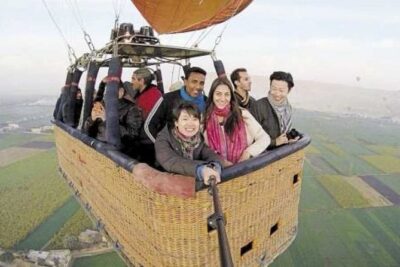
The second day starts around 5:00 a.m. for the hot-air balloon flight over Luxor’s west bank. You rise before breakfast, cross toward the launch area, and watch the sun come up over the temples and mountains.
This is one of the tour’s strongest features because it changes your view of Luxor completely. From the ground, the west bank is a series of separate monuments. From above, you see how the Nile, farmland, villages, temples, and desert edges relate to one another. The flight also gives you a quiet moment before the day returns to road transfers and guided visits.
You should be comfortable with the early start. A balloon ride is weather-dependent, and the exact experience can change with operating conditions. The tour includes the flight, but the supplied information does not provide a detailed schedule for breakfast or the balloon operator. Ask how the morning is arranged, especially if you care about eating before or after the flight.
After landing, the program moves into the west bank sights. The Valley of the Kings is the main event. You walk into a desert valley filled with royal tomb entrances, then descend into selected tombs. The admission arrangement is separate from the tour price, so confirm which tomb tickets are included in the entrance fees you will pay locally.
The Valley is rewarding, but the heat and walking can add up, particularly after the early balloon flight. Wear practical shoes, carry water, and keep your expectations sensible. You are seeing a remarkable group of ancient burial places, not a single grand building that can be understood in ten minutes.
The itinerary also includes Queen Hatshepsut’s temple, the Colossi of Memnon, and Carter House. Hatshepsut’s temple is set against the cliffs and has a strong architectural profile, while the Colossi provide a quick, photograph-friendly stop beside the road. Carter House connects the day to the discovery of Tutankhamun’s tomb and adds a more personal chapter to the story of archaeology.
The references to Howard Carter and the discovery of Tutankhamun help give the west bank visits a human thread. Your guide can connect the tombs, rulers, excavations, and modern tourism in a way that is more useful than simply collecting photographs.
Felucca sailing, Banana Island, and a taste of river life
The second day also includes a traditional Egyptian sailing felucca, a camel ride, Banana Island, and a typical Egyptian lunch. These additions keep the trip from becoming an all-temple schedule.
A felucca is a simple sailboat rather than a polished sightseeing vessel. That is part of its appeal. You sit close to the river, feel the pace slow, and see Luxor from the water. The experience is less about a formal attraction and more about giving you a short taste of daily life along the Nile.
Banana Island is included as part of the sailing outing. The program does not specify how long you stay there or exactly what is served, so treat it as a relaxed stop rather than a major historical site. The camel ride adds another traditional travel image, but you should ask your guide how long it lasts and how the activity is handled.
The included lunch is described as typical Egyptian food. That is useful for anyone who wants something beyond hotel dining, although the fixed schedule means you may have little choice about timing. With the balloon flight and west bank visits also on day two, the felucca may come late in a tiring day.
A positive detail here is the balance between major monuments and ordinary travel experiences. You are not only moving from one archaeological site to the next. You also get a boat, a local meal, and contact with the river that shaped ancient and modern Egypt.
Same sky, a different way to spend the morning:
- Hot Air Balloon Ride in Luxor Egypt with Transfers Included
★ 5.0 · 4,319 reviews - Luxor: Hot Air Balloon Ride over Luxor Relics
★ 4.8 · 1,681 reviews - Hurghada: 2-Day Luxor Tour with Hotel, Balloon, & Boat Ride
★ 4.5 · 1,113 reviews - Luxury Sunrise Balloon Ride in Luxor with Hotel Pickup
★ 5.0 · 1,104 reviews
Day three: the long road to Safaga and the Red Sea
The final day takes you from Luxor toward Safaga on the Red Sea. A private, air-conditioned vehicle is provided, and the route is described as a chance to see mountain scenery and everyday life along the way.
Safaga is known for its sea activities and for the claimed therapeutic qualities of its sands. You should treat the sand-related health language as part of the destination’s identity, not as a medical promise. The practical reason to come is the boat trip and snorkeling.
You board a snorkeling boat and sail out to a reef and island area. The package includes snorkeling equipment, lunch, and representatives to help manage the day. You can expect time in the water with fish and coral, plus a stop on an island or reef site described as one of the best in the area.
This is a welcome change after two days of temples. Clear water, fish, and open sea offer a different kind of Egyptian sightseeing. Still, the day is not effortless. You are traveling from Luxor to the coast and back into the tour’s flight network, so confirm the exact return timing before booking.
The supplied flight details list Cairo, Aswan, Hurghada, and Cairo, while the written plan describes a road trip from Luxor to Safaga and a snorkeling boat. Those details may reflect a transfer through Hurghada or a revised operating plan. Get the final flight and road schedule in writing. This is the one part of the arrangement where a small mismatch could create a major problem.
Guides, group size, and the value of private handling
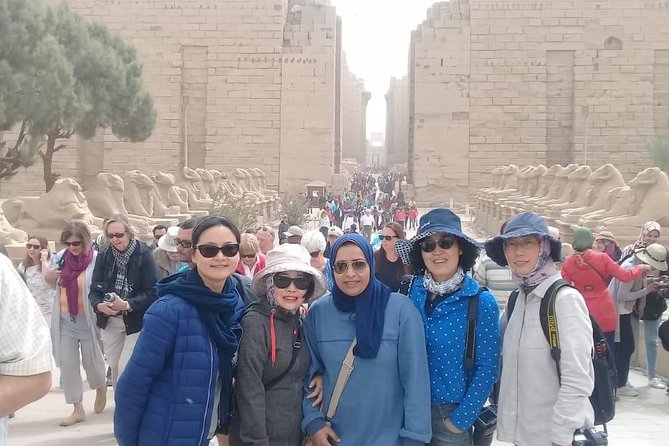
This is a private tour, so only your group participates. That gives you more control than a large coach trip. You can ask questions, adjust the pace within the fixed schedule, and speak directly with your guide when something needs clarification.
Mona is specifically praised for her work in Luxor. If she is available for your dates, requesting her could be worthwhile, especially because Luxor is the most information-heavy section of the trip. Haitham is also named in connection with the operation and received warm thanks for coordinating the experience.
The guides are described as qualified Egyptology guides, which matters at the Valley of the Kings, Hatshepsut’s temple, Philae, and Abu Simbel. These places are easier to appreciate when someone explains who built them, why they mattered, and how their remains fit together.
Private does not mean slow. The flights, train, balloon launch, temple visits, and snorkeling departure still run on fixed times. Think of the private format as personal handling inside a tight framework, not as a fully flexible custom holiday.
Door-to-door transfers are another strong point. You are picked up and returned to your hotel, transported in air-conditioned vehicles, and met by representatives at key stages. That is especially valuable during the pre-dawn balloon start and airport connections.
What to check before booking
Ask for the final flight route, since the included transport description mentions Cairo to Aswan, then Hurghada to Cairo, while the snorkeling plan uses Safaga and a road transfer from Luxor. Confirm which airport you use after the Red Sea outing and how much time is allowed between the boat and the flight.
Ask which entrance tickets are extra and which tombs can be entered at the Valley of the Kings. Also confirm the exact hotel name, room arrangement, and whether both nights are at the Lotus Hotel with a Nile view.
You should also check the daily pickup times, particularly the first flight, Abu Simbel transfer, balloon departure, and snorkeling boat. The operator provides free cancellation up to 24 hours before the start time, but changes or cancellations inside that window are not accepted for a refund. A minimum number of participants is required, and if the operator cancels for that reason, you are offered another date or a full refund.
Most people can participate, and the tour is near public transportation, but the schedule includes early starts, walking at monuments, boat boarding, and snorkeling. If you have concerns about mobility or water activities, discuss them before booking rather than assuming the private format removes every physical demand.
Who should book this Egypt itinerary?
I would choose this trip if you have only three days beyond Cairo and want a strong sample of southern Egypt. It suits first-time visitors who want the major ancient sites but also care about a balloon flight, Nile sailing, a camel ride, and time in the Red Sea.
It is also a good fit if you dislike arranging domestic flights, hotel transfers, train tickets, and boat trips yourself. The private format and named guides, especially Mona in Luxor, add useful personal support.
I would hesitate if you want slow archaeology, long meals, or free afternoons. The first two days are packed, and the final Red Sea outing may feel like a marathon after the balloon and west bank sightseeing. The extra entrance fees and tips also mean the advertised price is not your final spend.
Should you book it?
Book this tour if your priority is maximum variety with minimum planning. Abu Simbel, Philae, Luxor’s royal tombs, a sunrise balloon ride, a felucca, and Red Sea snorkeling make a memorable three-day route, and the $780 cost is reasonable for the flights, private transport, hotel, meals, and included activities.
Before committing, confirm the Safaga and Hurghada flight plan, the extra entrance charges, and the exact daily timetable. If those details are clear and you can handle early mornings, this is an efficient and unusually varied way to connect Cairo with Egypt’s southern highlights.
FAQ
How long is the tour?
The experience lasts approximately three days and includes two nights in Luxor.
Which flights are included?
The included flight details list Cairo, Aswan, Hurghada, and Cairo. Because the snorkeling plan also describes road transport between Luxor and Safaga, confirm the final flight and transfer arrangement before booking.
Is Abu Simbel included?
Yes. A private tour to the Abu Simbel Temple Complex is included, with transport from Aswan and an Egyptology guide.
Is the hot-air balloon flight included?
Yes. The balloon flight over Luxor’s west bank is included and begins around 5:00 a.m. on the second day.
Are meals included?
Yes. The package includes two breakfasts and lunch on each of the three days, including local or typical Egyptian meals and lunch during the snorkeling outing.
Are entrance fees included?
No. Entrance fees and tipping are not included in the stated price.
Just added around Egypt
- Amazing 8 Days Cairo,Luxor,Aswan,Abu Simbel,Nile Cruise&Air Balloon from Cairo★ 5.0 · 4 reviews
- Enjoy 3 days Aswan,Luxor,Abu Simbel,Nubian village,Balloon&train from Cairo★ 5.0 · 3 reviews
- Cruise From Aswan To Luxor,Balloon,Tours 2 nights 3 Days with Flight From Cairo★ 4.5 · 2 reviews
- over night by train from Cairo to luxor with hot air balloon★ 5.0 · 2 reviews
- 2 Days Luxor Tour from Cairo with hot air balloon by flight★ 5.0 · 3 reviews
- One package From Hurghada to Luxor: Balloon & Luxor Day Tour & Lunch & Felucca★ 5.0 · 8 reviews
- Enjoy The over night by flight from Cairo to luxor with hot air balloon★ 5.0 · 12 reviews
- Egypt 8-Nights Cairo, Nile Cruise, Abu Simbel&Balloon From Cairo★ 5.0 · 3 reviews
Giza Hot Air Balloon Rides, compared.
Egypt 8 nights:Cairo,Luxor,Aswan,Abu Simbel,Nile cruise,Balloon
Read our review →
7 Nights Cairo,Luxor,Aswan&Abu Simbel,Nile Cruise,Air Balloon from Cairo airport
Read our review →
5 Days Cruise Luxor, Aswan,Tours,Abu Simbel,Hot Air Balloon, From Cairo By Plane
Read our review →
9-Day Egypt Tour, Nile Cruise, Balloon, Flights
Read our review →
Amazing 8 Days Cairo,Luxor,Aswan,Abu Simbel,Nile Cruise&Air Balloon from Cairo
Read our review →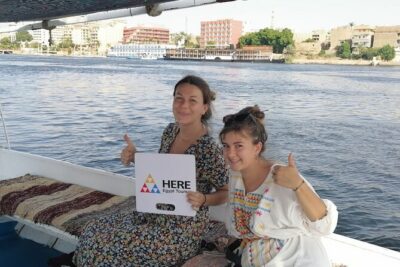
Enjoy 3 days Aswan,Luxor,Abu Simbel,Nubian village,Balloon&train from Cairo
Read our review →Browse the lists this tour appears in