
Review · CAIRO
3 Days: Aswan, Abu simble,Air Balloon,Luxor, from Cairo by plane
The biggest appeal here is simple: you can see Aswan, Abu Simbel, and Luxor in three days without spending long hours on Egypt’s roads from Cairo. Domestic flights, private transfers, hotels, and a sunrise balloon ride turn a difficult route into a compact Upper Egypt trip.
I like the private guide service, especially if you can request Samar, whose English, patience, and clear storytelling have earned strong praise. I also like the mix of famous monuments and local life, from Philae’s island setting to lunch in a Nubian village. The catch is the pace. Early starts, long drives, a train ride, and several major sites make this a rewarding but demanding trip.
Key points to know before booking
- Cairo to Aswan by plane: You avoid a long overland journey and begin sightseeing soon after arrival.
- Philae requires a motorboat: The temple sits on an island, making the approach part of the experience.
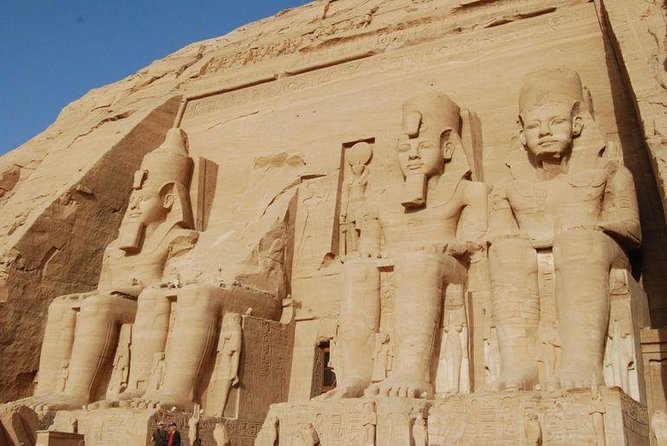
- Abu Simbel is a full-day commitment: Expect an early start and about eight hours for the round trip and visit.
- Luxor begins with a balloon ride: Sunrise views over the Theban Necropolis are the tour’s most unusual extra.
- Admissions are separate: Site tickets, extra tombs, and some other costs are not included in the $950 price.
- The schedule is private: Your group travels together, with air-conditioned transport and a guide.
What the $950 price really buys you
At $950 per person, this is not a budget tour. But the price covers the parts of Upper Egypt that are costly and awkward to arrange on your own: round-trip domestic flights, airport transfers, air-conditioned transport, two nights in four-star hotels, three lunches, two breakfasts, a private guide, and the hot-air balloon ride.
That package has real value if you have only three days. You are not piecing together separate flights, drivers, hotel nights, and local guides. You also avoid the uncertainty of finding transport to Abu Simbel or arranging a pre-dawn balloon transfer in Luxor.
Still, look closely at what is not included. Tickets for Philae, Abu Simbel, the Valley of the Kings, Hatshepsut’s temple, Karnak, and other mentioned sites are extra. Additional tombs, extra sites, personal spending, and meals beyond the stated lunches and breakfasts also come out of your pocket.
The flights and hotels are non-refundable. If poor weather cancels the balloon, you are offered another date or a full refund for the experience, while the stated balloon refund amount for changes is $30 per person. This is a tour to book only when your dates are firm.
A few more balloon flights around Cairo worth a look
- From Cairo: 3-Day Nile Cruise with Hot Air Balloon & Flights
★ 3.7 · 71 reviews - 3-Day Nile Cruise with Hot Air Balloon from Cairo by Flights
★ 5.0 · 53 reviews - 3 Days Cairo, Luxor, Aswan With Tours, Balloon , Abu Simbel and More By Flight
★ 5.0 · 2 reviews
Day one: Philae’s island temple and a Nubian afternoon
Your Cairo representative takes you to the airport in the morning. After flying to Aswan, you meet your local guide outside the airport hall and begin sightseeing by road.
Philae is a strong first stop. The temple complex sits on an island, so you reach it by motorboat rather than walking straight in from a parking area. That approach gives the visit a sense of arrival and helps explain why the site feels separate from modern Aswan.
The complex is associated with Isis and was developed over several periods, including the Ptolemaic and Roman eras. Allow about two hours here. Your guide’s role matters because the carved scenes, shrines, and religious stories can otherwise blur into a series of impressive stone walls.
Site admission is not included, and the tour information does not give the current ticket price. Bring cash or confirm the payment method before setting out. The motorboat is part of the access arrangement, so ask your guide what is covered and what is paid locally.
After Philae, you cross the Nile to a Nubian village. The visit lasts about two hours, including time to walk around the colorful houses and browse the market. Lunch is served at a local Nubian restaurant, giving the day a welcome change of pace after the formal temple visit.
This stop is less about ticking off another monument and more about seeing a lived-in community. Keep your expectations practical. The visit is guided and brief, not a long independent exploration, but it adds human scale to a day otherwise centered on ancient stone.
You return by motorboat to the east side of the Nile, then check in to your Aswan hotel. The plan calls for a four-star property with breakfast included. Since the hotel name is not provided, confirm it before booking if the standard of the room matters to you.
Day two: Abu Simbel demands an early start
Abu Simbel is the centerpiece of the second day, but it comes with a price in time. The temples are about 300 kilometers southwest of Aswan on the western shore of Lake Nasser. The excursion takes about eight hours, including the drive, the visit, and the return to Aswan.
The early departure is not a minor detail. You will have little time for a slow breakfast or a late morning. Pack water, keep your camera ready, and treat this as a full excursion rather than a quick side trip.
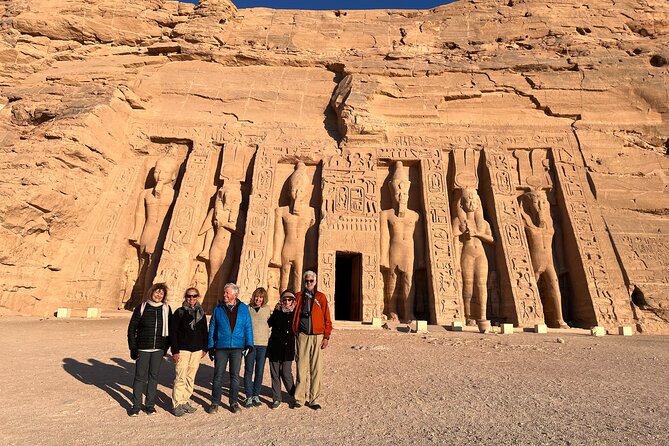
The temples were built during the reign of Ramses II, with the smaller temple honoring Queen Nefertari. The scale and setting make Abu Simbel different from the temples around Luxor. You are not simply adding another site to a list. You are making a long journey to see one of Egypt’s most famous royal monuments.
Admission is extra. The supplied details do not state how long you spend inside the complex, so your guide will control the timing around the drive and the later connection to Luxor. Ask about the day’s exact departure time and return plan before you leave Aswan.
After returning to Aswan, lunch is included, followed by an early evening train to Luxor. That combination makes the day efficient, but tiring. You have a long road excursion, a meal, and then a rail journey before reaching your four-star hotel in Luxor.
The itinerary says you stay overnight in Luxor. Breakfast is included the following morning. Because the train is an important part of the transfer, confirm the departure time and luggage arrangement with the operator before the trip.
Day three: a sunrise balloon flight over Luxor
The final day begins before breakfast. A balloon representative collects you from the hotel, takes you across the Nile by motorboat, and then transfers you in small groups to the balloon takeoff area.
The flight lasts about two hours. From above, you look across Luxor and the Theban Necropolis as the sun rises. This is a striking contrast to the close-up work of temple visits. Instead of studying carved walls, you get a broad view of the area’s monuments and desert setting.
The flight depends on weather. If poor conditions cancel it, the stated policy offers another date or a full refund. Since you are leaving Luxor later that day, a new date may not be practical, so ask how the refund or replacement would work for your specific schedule.
After the flight, you return to the hotel for breakfast and check out. The balloon ride is included, but the early start means you should organize luggage the night before. You do not want to spend the pre-dawn transfer searching for chargers, shoes, or passports.
Same sky, a different way to spend the morning:
- Egypt: Private 5-Day Tour, Nile Cruise, Flights & Balloon
★ 4.1 · 248 reviews - Private Day from Cairo to Luxor by plane with hotel,balloon,west,east and lunch
★ 4.5 · 199 reviews - From Cairo: Luxor & Hot Air Balloon Private Trip by Plane
★ 4.2 · 134 reviews - From Cairo: 4-Day Nile Cruise to Luxor with Balloon Flight
★ 4.2 · 112 reviews
Valley of the Kings: choose your tombs carefully
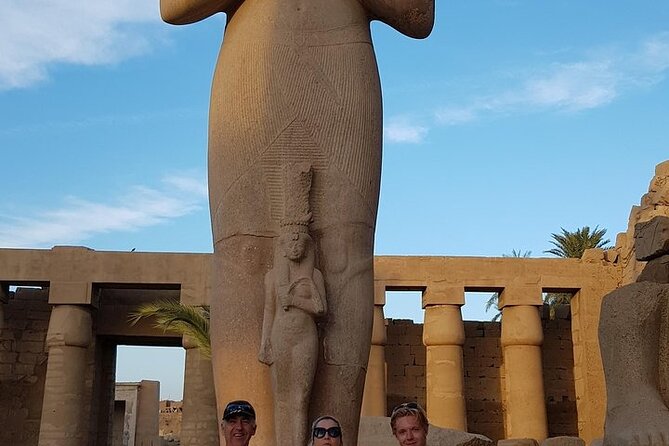
After checkout, your guide takes you to the west bank and the Valley of the Kings. More than 63 tombs have been found here, although not every tomb is open at one time and standard admission does not necessarily cover every additional tomb.
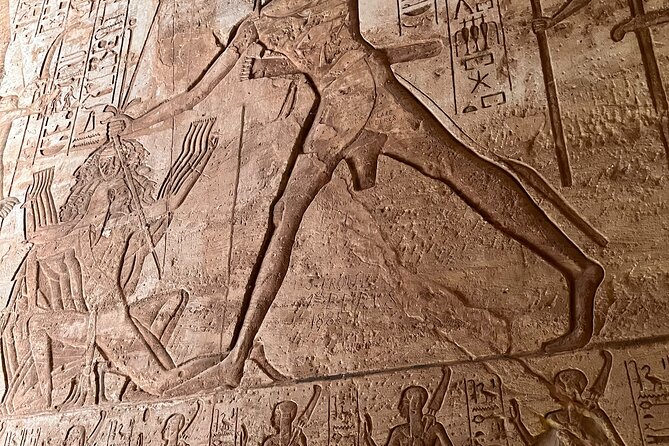
The visit is scheduled for about two hours. The tombs are known for painted scenes drawn from ancient religious texts, including descriptions of the sun’s journey and the fate of the deceased king. The value of a guide becomes clear here. A knowledgeable explanation, especially one delivered in clear English and at a measured pace, helps you understand what the painted figures and symbols mean.
Admissions are not included. Extra tombs also cost more, so decide in advance how much you want to spend. Heat, steps, and narrow passages can make the visit tiring, particularly after the balloon ride and an early breakfast.
If Samar is available, ask for her by name when you book. She is praised for speaking excellent English, explaining sites without rushing, and adapting the pace to the group. That matters in the Valley of the Kings, where a good guide can help you focus instead of trying to absorb every wall at once.
Hatshepsut’s temple below the cliffs
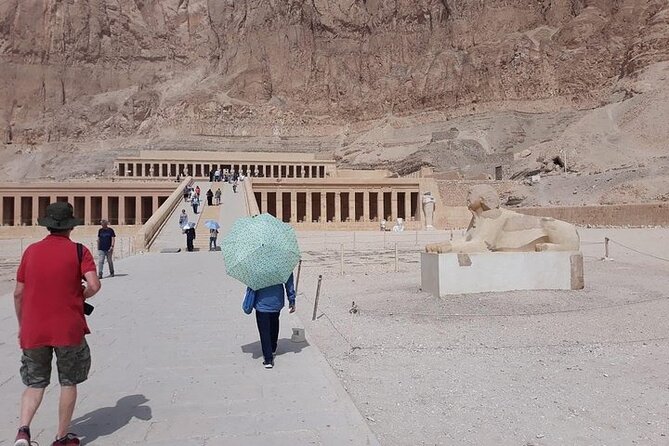
From the Valley of the Kings, you continue to the mortuary temple of Queen Hatshepsut at Deir el Bahari. The temple is built into the cliffs on three levels, creating a different visual experience from the underground tombs.
Hatshepsut ruled Egypt for 21 years as king, and the site gives your guide a chance to explain how royal power and temple design worked together. The preserved color and long terraces make this a relatively open-air stop, though the sun can be strong.
Plan on about an hour. Admission is extra, and the short visit means you will get an overview rather than an exhaustive look at every feature. That is sensible on a three-day route, but visitors who want long, detailed time at each monument may find the schedule too tight.
Karnak Temple closes the trip with scale
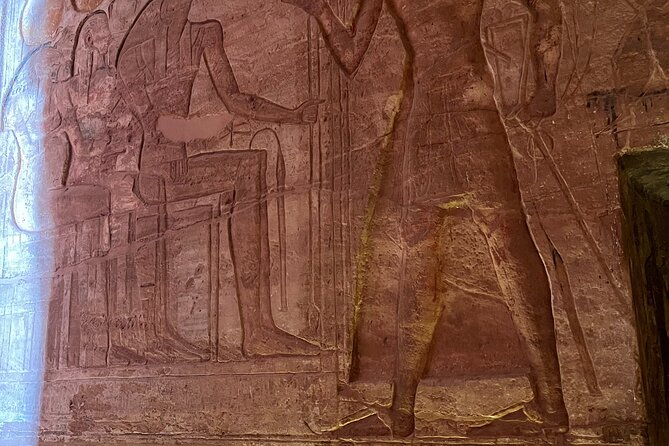
After the west bank, you return to the east side for lunch at a local restaurant. Then comes Karnak, the largest and most expansive temple complex on this route.
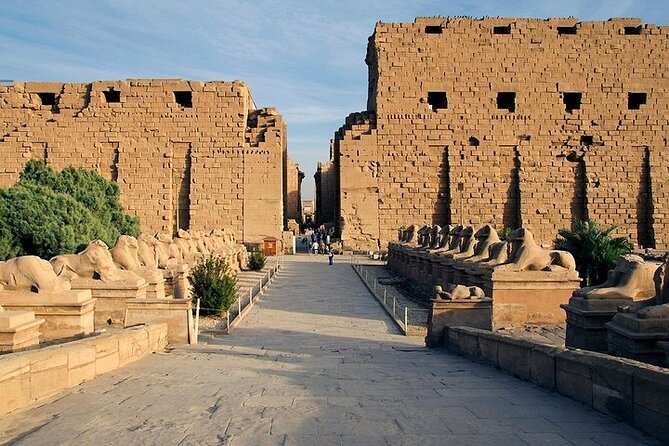
The planned visit lasts about three hours. Karnak was used as a religious center for more than 500 years, and its hypostyle hall, shrines, and chambers give you a final burst of monumental architecture before the airport.
This is where a private guide earns the fee. Karnak can feel confusing because of its size and the number of periods represented in its buildings. A good guide can set a route, explain the major areas, and keep you moving without turning the visit into a rushed march.
Admissions are not included. You should also keep an eye on the clock. After Karnak, you are driven to Luxor airport for the evening flight to Cairo, where a representative meets you outside the airport hall for your final drop-off.
The guide can make or break the experience
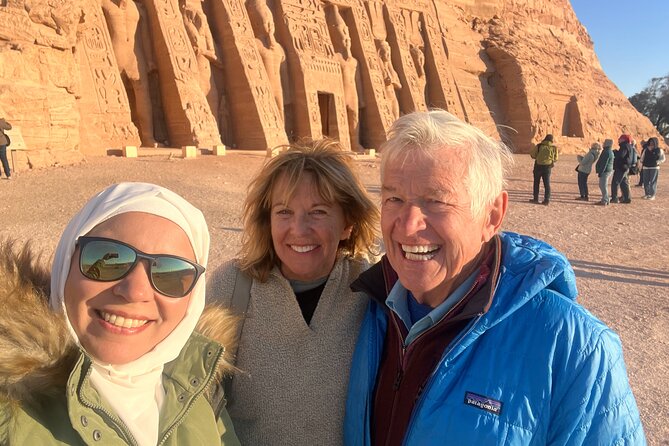
The strongest part of this tour is likely to be the guide. The most praised guide connected with these Upper Egypt visits is Samar. Her strengths are useful ones: clear English, patience, strong knowledge of Luxor’s monuments, and a warm manner that helps solo visitors and families feel comfortable.
She is also described as someone who answers questions without forcing the group to hurry. That is important because the itinerary already has plenty of fixed movement. You want the guide to make the sites understandable, not add pressure.
Samar may not be available for every booking, so request her rather than assuming she will lead the tour. If another guide is assigned, ask about language, the exact sites covered, and how much flexibility your group has at each stop.
The tour is private, meaning only your group participates. That gives you more control than a large coach tour, but the major transport links still shape the schedule. Flights, the Abu Simbel drive, the evening train, and the final Luxor flight cannot be treated as casual suggestions.
Who should book this three-day route?
I would choose this tour if you have already seen Cairo and want the major Upper Egypt highlights without adding a week to your trip. It suits first-time Egypt visitors who value a guide, private transport, and prearranged connections more than a slow, independent pace.
It also works well for a small family group or friends who want to stay together. The private format means you are not waiting for a large bus at every stop, and group discounts may be available.
I would hesitate if you dislike early mornings, long road trips, or fixed schedules. Abu Simbel takes most of one day, the balloon begins before breakfast, and the final day combines three major Luxor sites with an evening flight.
Solo visitors may appreciate the airport assistance, private transfers, and guide support. The tour information says most people can participate, but it does not provide detailed mobility guidance. Ask the operator about walking, steps, boat boarding, and tomb access if those details affect your plans.
My booking advice
Book this trip for access and efficiency, not for relaxation. The combination of flights, four-star accommodation, meals, local transport, a private guide, Abu Simbel, and a balloon ride makes the $950 price reasonable for a short, fully arranged route, provided you budget separately for entrance tickets and extras.
Before paying, confirm the hotel names, flight times, train details, guide language, and which costs are handled locally. Ask specifically if Samar can guide the Luxor portion. If you want to see the best-known sights of Aswan and Luxor, add Abu Simbel, and enjoy one unusual morning above the monuments, this is a strong three-day plan. If you want long visits, free time, or a relaxed Egypt holiday, choose a longer itinerary instead.
FAQ
How long is the tour?
The tour lasts approximately three days, beginning with a morning flight from Cairo to Aswan and ending with an evening flight from Luxor back to Cairo.
Are the domestic flights included?
Yes. Round-trip plane tickets are included for the Cairo to Aswan and Luxor to Cairo route.
Is accommodation included?
Yes. Two nights of four-star hotel accommodation are included, with one night in Aswan and one night in Luxor. Breakfast is included at the hotels.
Is Abu Simbel included in the schedule?
Yes. The tour includes a trip to Abu Simbel from Aswan. The excursion takes about eight hours, but admission to the temple complex is not included.
Are entrance tickets included?
No. Tickets for the listed archaeological sites are not included. Extra tombs, additional sites, extra meals, and personal expenses are also excluded.
Is the hot-air balloon ride included?
Yes. The balloon ride over Luxor is included and takes about two hours. It requires good weather. If poor weather causes cancellation, you are offered another date or a full refund.
Can I cancel the tour for a refund?
No. The experience is non-refundable and cannot be changed for any reason. The stated policy says flights and hotel bookings are non-refundable as well.
Just added around Cairo
- over night by train from Cairo to luxor with hot air balloon★ 5.0 · 2 reviews
- 2 Days Luxor Tour from Cairo with hot air balloon by flight★ 5.0 · 3 reviews
- One package From Hurghada to Luxor: Balloon & Luxor Day Tour & Lunch & Felucca★ 5.0 · 8 reviews
- Enjoy The over night by flight from Cairo to luxor with hot air balloon★ 5.0 · 12 reviews
- Egypt 8-Nights Cairo, Nile Cruise, Abu Simbel&Balloon From Cairo★ 5.0 · 3 reviews
- Overnight Luxor Tours by train from Cairo with Hot Air Balloon and much more★ 5.0 · 29 reviews
- Hot Air Balloon The Life Trip in Luxor Egypt★ 5.0 · 4 reviews
- 6 Days Cairo, Luxor, Aswan & Abu Simbel & balloon over luxor★ 5.0 · 3 reviews
Cairo Hot Air Balloon Rides, compared.
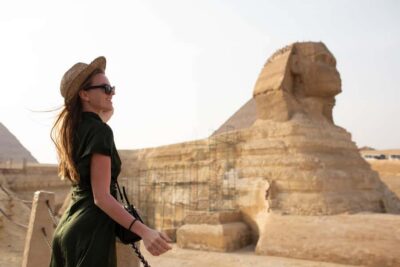
Egypt: Private 5-Day Tour, Nile Cruise, Flights & Balloon
Read our review →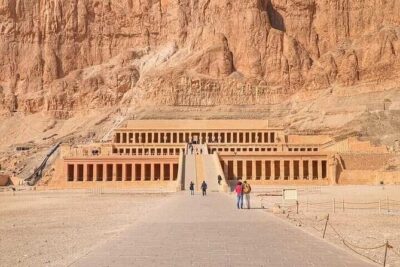
Private Day from Cairo to Luxor by plane with hotel,balloon,west,east and lunch
Read our review →
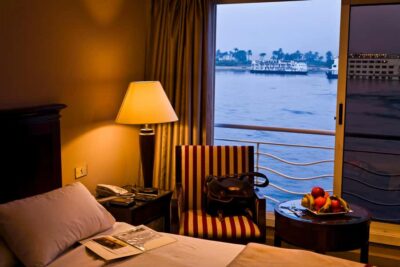
4-Day Nile Cruise to Luxor with Balloon Flight
Read our review →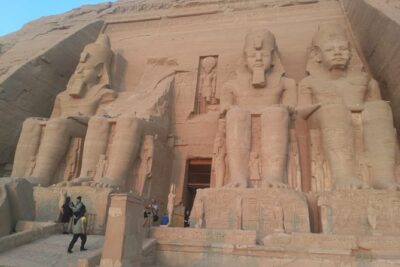
3 Night Luxor and Aswan Nile Cruise with Hot Air Balloon, Abu Simbel from Luxor
Read our review →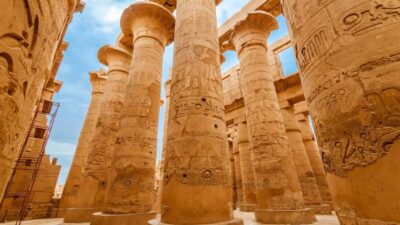
3-Day Nile Cruise with Hot Air Balloon & Flights
Read our review →
3-Day Nile Cruise with Hot Air Balloon from Cairo by Flights
Read our review →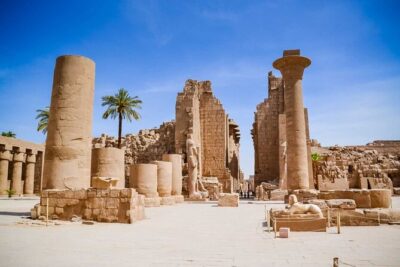
From Cairo 4-Day Nile Cruise to Aswan by Flights& Hot Air Balloon
Read our review →Browse the lists this tour appears in