
Review · ASWAN
4 Days 3 Nights Cruise From Aswan To Luxor (Abu Simbel&Hot Air Balloon)
The big draw here is the way one four-day journey links Egypt’s greatest river sights without packing and unpacking each night. You begin in Aswan, visit Abu Simbel, cruise toward Luxor, then finish above the city in a hot-air balloon before exploring the west bank.
I like the mix of famous monuments and easy shipboard travel, especially with a pool, three meals a day, and air-conditioned transport included. I also like the personal feel of a private group with an Egyptology guide. The main catch is that entrance fees, drinks, and tips are extra, and the schedule covers a lot of ground in only four days.
Key points to know before booking
- Abu Simbel is included on Day 2, giving you time at Ramses II’s enormous temples.
- The hot-air balloon ride takes place in Luxor on Day 4, alongside the Valley of the Kings and Hatshepsut’s temple.
- Three nights are spent on a 5-star Nile cruise, with a swimming pool and cabin facilities.
- Meals included are three breakfasts, three lunches, and three dinners, but extra meals and drinks are not covered.
- The route is effectively Aswan to Luxor, despite a description that also refers to sailing from Luxor to Aswan.
- Entrance fees and tipping are separate costs, so budget for them before you go.
A Nile cruise that connects Aswan and Luxor
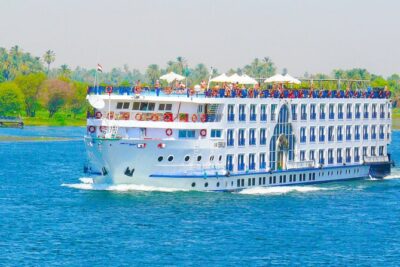
A Nile cruise gives you a calm base for a busy sightseeing plan. Instead of changing hotels while moving between southern Egypt’s main ancient sites, you sleep on the same ship for three nights. The vessel has an onboard swimming pool, cabins with facilities, dining service, and air conditioning.
The price is $550 per person. That is a fair value if you use the included transport, guide, meals, Abu Simbel visit, and balloon ride. It is not an all-inclusive price, though. You still need to pay entrance fees, tips, and extra food or beverages.
The private format matters. Only your group participates, so you can ask questions and move at a pace set by your guide rather than by a large coach party. The available information does not give the guide’s name, so you should ask for that detail before booking if a named guide matters to you.
One practical note needs clearing up. The title and day-by-day plan point to an Aswan-to-Luxor route, while the general description says Luxor to Aswan. Confirm the direction, pickup point, and final drop-off before paying. The listed itinerary begins with arrival in Aswan and ends with Luxor sightseeing, so that is the route I would expect.
More Abu Simbel and Balloon Tours in Aswan:
- 4-Days Nile Cruise From Aswan To Luxor including Abu Simbel and Hot Air Balloon
★ 5.0 · 3,142 reviews - 4-Day 3-Night Nile Cruise from Aswan to Luxor&Abu Simbel+Balloon
★ 5.0 · 2,023 reviews - 4-Day 3-Night Nile Cruise from Aswan to Luxor including Abu Simbel, Air Balloon
★ 4.5 · 612 reviews
Day 1: Aswan’s dam and the rescued temple of Philae
Your first step is a transfer from the train station or hotel to the cruise ship. Meet-and-assist service is included on arrival and departure, which can be useful in Aswan, especially if you are arriving with luggage and need help finding the correct ship.
The first major stop is the High Dam. Built in the 1960s, it was designed to control Nile flooding and generate electricity. The dam changed daily life across Egypt, but it also threatened several ancient monuments with inundation. That story gives the visit more weight than a quick engineering stop might suggest.
Next comes Philae Temple, one of the most attractive temple settings in Egypt. The complex sits on Agilkia Island, south of the old Aswan Dam, and you reach it by water taxi. The boat ride is part of the appeal, since the temple is surrounded by water rather than sitting beside a modern road.
Philae was moved stone by stone to its present island when the High Dam placed its original location at risk. At the site, you can look closely at the courtyards, columns, gateways, and reliefs while also appreciating the setting. It is a good first taste of the cruise because it combines ancient worship, modern engineering, and a short boat transfer in one outing.
Your first night is on the ship. Dinner is included, as are breakfast and lunch on the appropriate days of the cruise. The schedule does not give exact sailing or meal times, so ask the operator how much free time you will have on board and when the ship moves between stops.
Day 2: The long trip to Abu Simbel
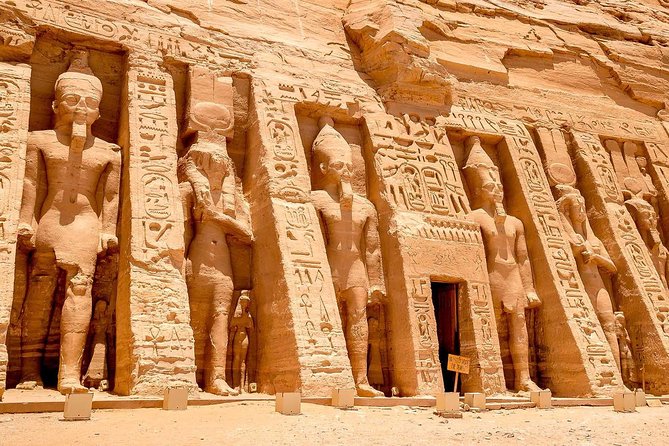
Abu Simbel is the most demanding stop on the plan, but it is also the reason many people choose this cruise. The temples were carved into the cliffs on the west bank of the Nile between 1274 and 1244 BC. Their scale is immediate: four huge statues of Ramses II face outward from the main temple like stone guardians.
The main temple honored Ramses II along with Ra-Horakhty, Amun, and Ptah. Inside, the plan is carefully balanced, with linked halls, repeated religious imagery, and twin sanctuaries. The symmetry makes the building easy to understand even if this is your first ancient Egyptian site.
A second temple is dedicated to Nefertari and the goddess Hathor. Its paired design reflects the royal and religious relationship at the heart of the complex. The two temples are not simply large monuments in an empty setting. They were statements of royal power placed near Egypt’s southern frontier.
The trip to Abu Simbel can make Day 2 feel long. The itinerary does not state the transport duration or departure hour, so ask those questions before booking. You should also confirm how much time is allowed inside each temple. The price includes the hot-air balloon and cruise services, but entrance fees are not included, and that applies to the major archaeological stops unless the operator confirms otherwise.
The relocation of Abu Simbel is another important part of the visit. Like Philae, the temples were saved from flooding after the High Dam was built. You are seeing an ancient monument in a modern location, made possible by one of the largest preservation projects of the twentieth century.
After the visit, return to the ship or assigned transport arrangements. Your guide is included, and that support is useful here because the temples contain many figures, gods, and scenes that are easier to understand with explanation. The private group format should also make it simpler to stop for questions.
Day 3: Edfu and Luxor’s great temples
Edfu Temple is one of the best-preserved ancient monuments in Egypt. Built during the Ptolemaic period between 237 and 57 BC, it was dedicated to Horus, the falcon-headed god and son of Isis and Osiris.
The temple survived in unusually good condition partly because desert sand covered it after the old pagan cult ended. Its roof remains intact, giving the interior a darker, more enclosed feeling than many open-air Egyptian ruins. You can make out the formal courtyards, massive walls, reliefs, and religious spaces with unusual clarity.
Edfu is a valuable stop because it lets you see a later period of Egyptian temple building. The site is not only about age. Its preserved structure helps you understand how a temple was organized, from the outer entrance toward the inner sanctuary.
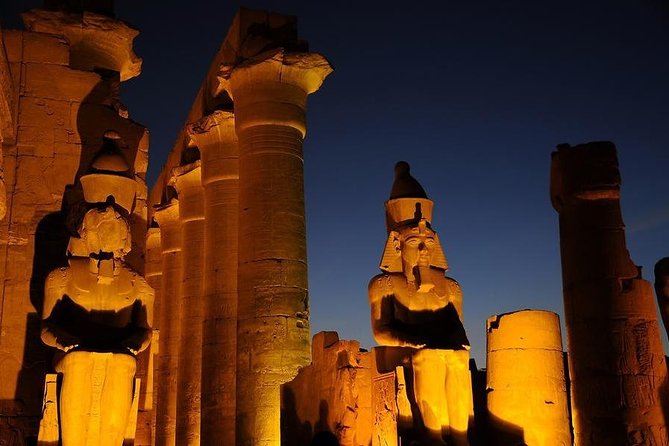
Later, Luxor Temple brings you into the modern city. Much of it was built by Amenhotep III and Ramses II during the New Kingdom, from roughly 1550 to 1069 BC. The temple was known as the Southern Sanctuary and played a central role in the annual Opet festival.
During Opet, statues of Amun, Mut, and Khonsu were carried from Karnak to Luxor Temple along the Avenue of Sphinxes. The ceremony linked the religious center at Karnak with the royal and ceremonial spaces at Luxor. Even with the modern town around it, the temple still gives you a clear sense of that connection.
Karnak is the day’s largest complex. Its main sanctuary was dedicated to Amun-Ra and includes the famous Great Hypostyle Hall, filled with giant papyrus-shaped columns. The scale can be hard to absorb from photographs. Walk among the columns and look upward, where surviving decoration and the height of the hall show the ambition of the builders.
Karnak and Luxor Temple work well together. Karnak feels like an enormous religious center, while Luxor Temple feels more tied to ceremony, kingship, and the city. Seeing both in one day gives you a stronger understanding of ancient Thebes than visiting only one.
A few more balloon flights around Aswan worth a look
- 4 Days Nile Cruise from Aswan to Luxor including Abu Simbel and Hot Air Balloon
★ 4.5 · 356 reviews - 4-Day 3-Night Nile Cruise from Aswan to Luxor With Balloon and Abu Simbel
★ 5.0 · 327 reviews - From Aswan:4 Days Nile Cruise Luxor Abu Simbel & Air Balloon
★ 4.4 · 310 reviews - 4-Day Nile Cruise sails Aswan to Luxor&Abu Simbel.Hot air Balloon
★ 4.5 · 247 reviews
Day 4: A balloon flight over Luxor
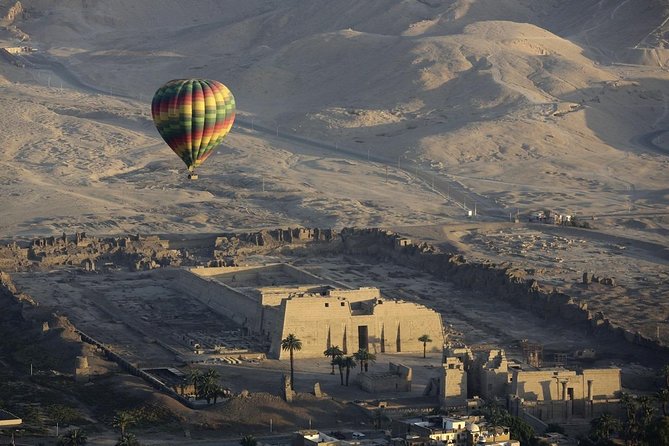
The hot-air balloon ride is scheduled for Day 4. It gives you a different view of Luxor before the final west-bank visits. From the air, you can see the city, the Nile, the cultivated river corridor, and the dry terrain beyond it, though the exact flight time and duration are not provided.
The flight is an early-morning activity in many balloon programs, but you should confirm the pickup time directly because the supplied schedule does not state it. You also need to ask how the balloon ride fits with the rest of the day and whether transport back to the ship or hotel is included after landing.
This is one of the tour’s best value features because a balloon ride is not simply another temple entrance. It changes your view of Luxor and helps you understand how tightly the Nile shapes settlement and agriculture. The experience also breaks up several days of ground-level sightseeing.
The flight is weather dependent in practice, but no weather policy is provided here, so ask the operator what happens if it cannot run. Do not assume that a canceled flight automatically means a refund unless the provider confirms it.
Valley of the Kings and Hatshepsut’s temple
The Valley of the Kings occupies the west bank of Luxor, where royal burials took place from around 2100 BC. New Kingdom pharaohs later chose this dry valley, dominated by the pyramid-shaped peak of Al Qurn, for their tombs.
The valley contains 63 known royal tombs. The exact tombs included in your admission are not specified, and entrance fees are separate. Ask which tickets are covered, how many tombs you can enter, and whether special tombs require an additional payment.
Inside, expect painted corridors, chambers, and scenes connected with the pharaoh’s journey into the afterlife. The experience is more enclosed than the open courtyards of Karnak or Luxor Temple. If you dislike heat or tight spaces, tell your guide early so the visit can be handled at a comfortable pace.
Deir Al Bahri gives you a dramatic change of setting. Rugged limestone cliffs rise behind the Temple of Hatshepsut, whose broad terraces blend with the rock. The building has a clean, almost modern appearance, though much of what you see has been reconstructed.
Hatshepsut’s temple is valuable not only for its design but also for its setting. The cliffs and terraces create a strong visual arrangement, and the site helps you understand how royal monuments were placed in relation to the surrounding desert and sacred spaces.
The west-bank program is full. You will see a famous royal cemetery, an unusual temple built against cliffs, and a balloon flight in the same final day. Wear practical clothing, carry water, and keep your expectations realistic about free time. The itinerary does not promise long independent visits.
Meals, cabins, transport, and group size
The package includes three nights aboard a 5-star Nile cruise, with a cabin and onboard facilities. A swimming pool is available on the ship, giving you a place to rest between visits, though the information does not describe its size or opening hours.
Three breakfasts, three lunches, and three dinners are included. Extra meals and beverages are not. Ask whether bottled water, soft drinks, and coffee are included before you board, since those costs can add up over several days.
Air-conditioned vehicle transport is provided for the land excursions. Pickup is offered, and the tour can begin from a hotel or train station in Aswan. Meet-and-assist support is included for arrival and departure, which is helpful if your train connection or hotel location is unfamiliar.
The activity is private, so only your group participates. That arrangement suits couples, families, and small groups who want to ask questions without holding up a large party. Group discounts are also available, but the exact discount structure is not provided.
Public transportation is nearby, and most people can participate. No special accessibility information is given, so ask about the water taxi at Philae, boarding the cruise ship, walking on uneven temple surfaces, and the balloon transfer if anyone in your group has mobility concerns.
What the $550 price really covers
At $550 per person, the package brings together several costly pieces: three nights on a 5-star ship, three meals per day, air-conditioned transport, a qualified Egyptology guide, Abu Simbel, the Luxor balloon ride, and arrival and departure assistance.
That makes the price attractive for someone who wants a fixed plan. You are paying for convenience as much as for the cruise itself. The private group format adds value if you prefer direct contact with your guide and do not want a large scheduled party.
The missing costs matter. Entrance fees are not included, and neither are tips, extra meals, or beverages. Before booking, request a written estimate for entrance tickets and ask which sites require separate charges. Budget extra for tipping as well.
The provider offers free cancellation up to 24 hours before the experience begins. Changes or cancellations made less than 24 hours in advance are not accepted for a refund. The cutoff uses local time, so keep that in mind if you are booking from another country.
Who should book this cruise?
I would choose this for someone visiting Egypt for the first time who wants the main Aswan and Luxor sights in a short, organized trip. It suits you especially well if you value a shipboard base, included meals, private guiding, and a mix of temples, tombs, river travel, and aerial views.
It is also a good fit for a couple or family that wants a private group rather than a large coach tour. The cruise ship gives you downtime, while the guide and transport reduce the work of arranging each site separately.
I would hesitate if you want a slow cruise with long hours on deck and plenty of unplanned time. Abu Simbel, Edfu, Karnak, Luxor Temple, the Valley of the Kings, Hatshepsut’s temple, and a balloon ride create a packed program. I would also hesitate if you want one clear all-inclusive price, since entrance fees, drinks, meals beyond the package, and tips remain separate.
Should you book it?
Book this cruise if your priority is seeing the essential Aswan and Luxor sights efficiently, with Abu Simbel and a Luxor balloon ride built into the same four-day plan. The combination of a 5-star ship, private group, Egyptology guide, air-conditioned transport, and included meals gives the $550 price solid value.
Before you commit, confirm the sailing direction, exact pickup and drop-off points, entrance-fee costs, balloon timing, and the schedule for the long Abu Simbel day. If those details suit you, this is a practical way to experience the Nile and Egypt’s greatest southern monuments without arranging every transfer yourself.
FAQ
How long is the cruise?
The experience lasts approximately four days and includes three nights aboard a 5-star Nile cruise.
Does the cruise travel from Aswan to Luxor?
The day-by-day plan begins in Aswan and ends with sightseeing in Luxor, so it presents an Aswan-to-Luxor route. The general description also refers to Luxor to Aswan, so confirm the direction with the provider before booking.
Is Abu Simbel included?
Yes. Abu Simbel is scheduled for Day 2, including the main temple of Ramses II and the temple dedicated to Nefertari and Hathor.
Is the hot-air balloon ride included?
Yes. A hot-air balloon ride over Luxor is included on Day 4.
Are meals included?
Three breakfasts, three lunches, and three dinners are included. Extra meals and beverages are not included.
Are entrance fees included?
No. Entrance fees are listed as an additional cost. Ask the provider for the current total and which site tickets you will need.
Is this a private tour?
Yes. Only your group participates in the activity. Group discounts are also available.
What is the cancellation policy?
You can cancel at least 24 hours before the experience starts for a full refund. Cancellations or changes made less than 24 hours before the start time are not accepted for a refund.
Just added around Aswan
- (3-Nights Cruise From Aswan To Luxor & Balloon, Abu Simbel)★ 4.5 · 23 reviews
- 4-Days Nile Cruise From Aswan To Luxor Abu Simbel and Air Balloon★ 4.5 · 2 reviews
- 8 Nights Egypt Tour,Cairo,Luxor,Aswan&Abu Simbel,Nile Cruise,Hot Air Balloon★ 4.5 · 11 reviews
- 4-Day Nile Cruise: Aswan to Luxor & Abu Simbel + Hot Air Balloon★ 4.5 · 35 reviews
- 3-Nights Cruise From Aswan To Luxor, Hot Air Balloon,Abu Simbel★ 4.5 · 46 reviews
- 4 Days Nile Cruise &Hot Air Balloon on M/S Movenpick Royal Lilly★ 5.0 · 4 reviews
- (Wonderful 3-Nights Nile Cruise from Aswan to Luxor & Balloon)★ 4.5 · 17 reviews
- Luxor: 4-Night Nile cruise , Hot Air balloon , west bank , abu simbel★ 5.0 · 3 reviews
Aswan Hot Air Balloon Rides, compared.
4-Days Nile Cruise From Aswan To Luxor including Abu Simbel and Hot Air Balloon
Read our review →
4-Day 3-Night Nile Cruise from Aswan to Luxor&Abu Simbel+Balloon
Read our review →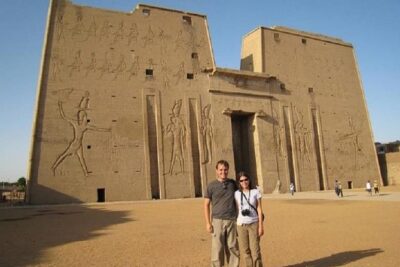
4-Day 3-Night Nile Cruise from Aswan to Luxor including Abu Simbel, Air Balloon
Read our review →
4-Days Nile Cruise From Aswan To Luxor including Abu Simbel and Hot Air Balloon
Read our review →4 Days Nile Cruise from Aswan to Luxor including Abu Simbel and Hot Air Balloon
Read our review →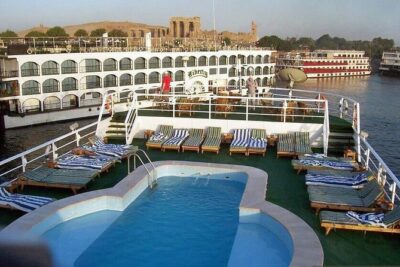
4-Day 3-Night Nile Cruise from Aswan to Luxor With Balloon and Abu Simbel
Read our review →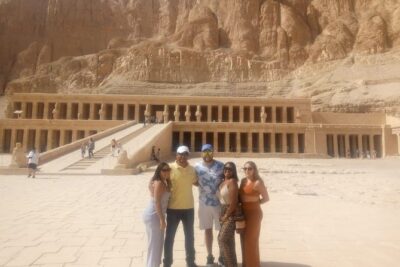
4-Days Nile Cruise Aswan&Luxor,Hot Air Balloon&Abu Simbel.Hot deal
Read our review →Browse the lists this tour appears in