
Review · SIEM REAP
Angkor Wat: Small-Group Tour with Balloon Ride and Lunch
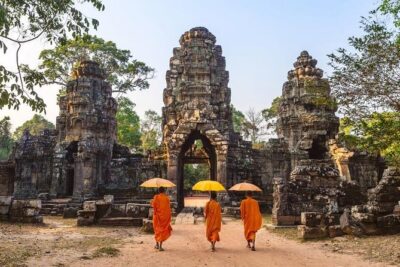
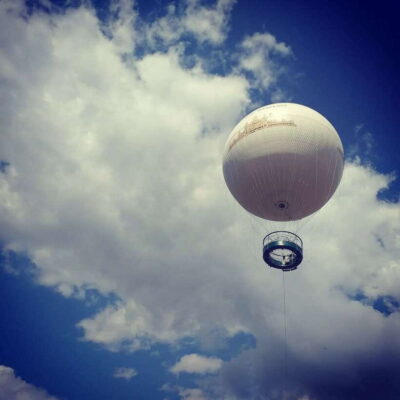
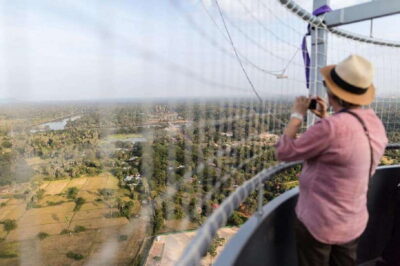
Angkor Wat is only part of this day. You also enter the fortified city of Angkor Thom, face the enormous carved heads at Bayon, walk past the Elephant Terrace, and see tree roots gripping Ta Prohm. The tethered helium balloon adds an unusual view of the temple grounds and jungle from about 200 meters up.
I like the thoughtful guiding and the easy transport between widely spaced temples. Guides such as Chou, Nak Chum, and Phuy Phy have been praised for clear history, considerate pacing, and even taking excellent phone photos. I also like that lunch and bottled water are included. The catch is value: at $111, you still pay the $37 Angkor Pass yourself, and the balloon depends on weather.
Key points to know before booking
- Four major Angkor stops: Angkor Wat, Angkor Thom, Bayon, and Ta Prohm give you a strong first look at the park.
- A guide makes the carvings readable: Your English-speaking Cambodian guide explains the symbolism behind the walls, towers, faces, and causeway statues.
- The balloon is weather-dependent: The 10-minute tethered ride can reach about 200 meters, but timing may change between 6 AM and 5 PM.
- Lunch is practical, not optional: A Khmer set-menu lunch is included, while drinks at the meal are extra.
- Small-group service can feel personal: Some departures have operated with only one participant, though the exact group size can vary.
- Dress for temple rules: Wear pants or a knee-length skirt or dress, with covered shoulders and comfortable walking shoes.
Why this seven-hour Angkor day works
Angkor is too large and spread out for a casual walk from one monument to the next. This tour gives you an air-conditioned shared vehicle, hotel pickup in central Siem Reap, a local guide, lunch, and a planned route through the most important temple areas.
That matters in Cambodia’s heat. You will still walk a moderate amount, but the vehicle saves your legs between sites. It also lets you focus on the carvings rather than worrying about transport from Angkor Wat to Angkor Thom and then Ta Prohm.
The tour is described as a small-group experience, but the group may be smaller than expected. One departure had only one participant, turning the planned group outing into a private tour. That is a pleasant possibility, not a promise. Your guide and driver may vary, although names praised in past departures include Chou, Chantorn, Nak Chum, Pola, Vong, and Phuy Phy.
The day begins with hotel pickup around 8 AM, with instructions to be ready earlier because the vehicle may arrive before the stated departure. You first go to the Angkor ticket office to buy your pass. The entrance fee is not included, so budget another $37 per person for the one-day Angkor Pass.
A few more balloon flights around the world worth a look
- Antalya: Pamukkale Tour with Hot Air Balloon and Lunch
★ 4.4 · 510 reviews - From Antalya: Pamukkale Hot Air Balloon Flight with Lunch
★ 4.3 · 494 reviews - From Antalya Pamukkale Hot Air Balloon Flight with Lunch
★ 4.5 · 310 reviews
Angkor Wat, where stone tells the story
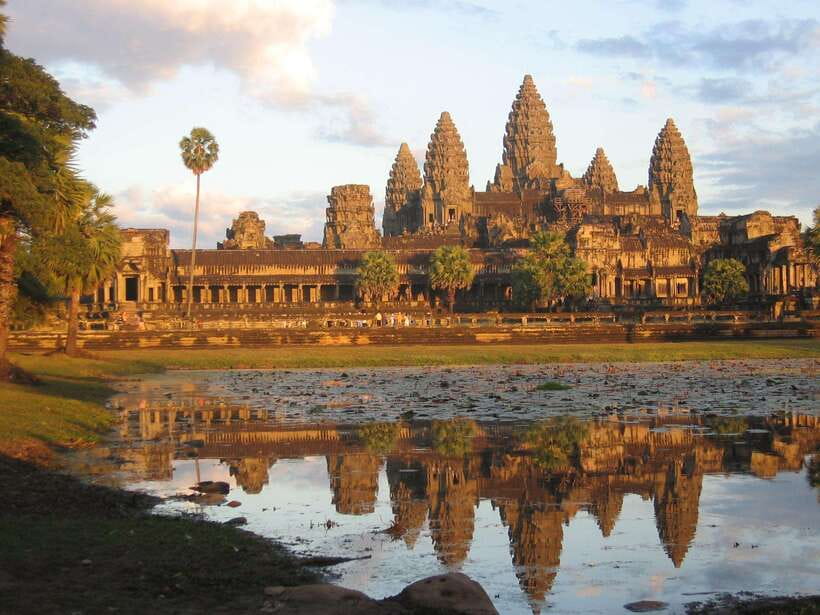
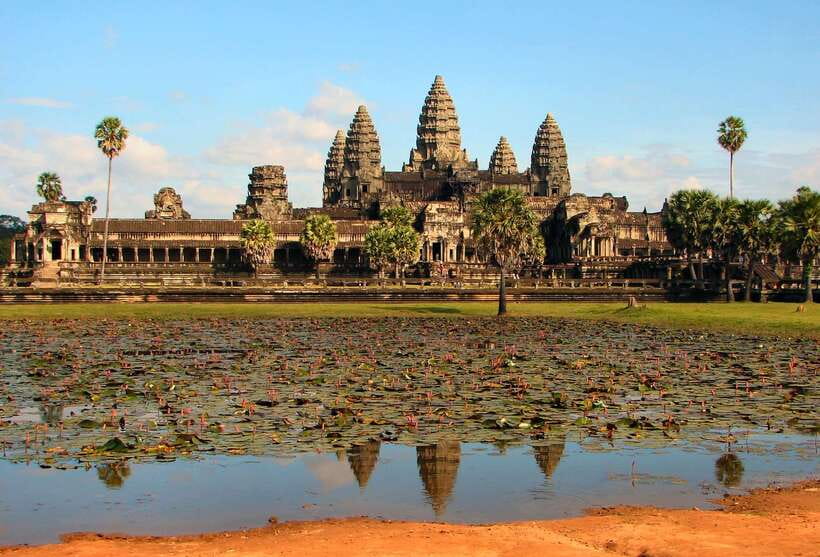
Angkor Wat deserves the time this tour gives it. It is enormous, highly detailed, and much more than a quick photo stop. You will see long galleries, carved columns, chambers, towers, and walls covered with bas-reliefs.
The guide’s role is important here. Without context, the carvings can become a long procession of stone figures. With an explanation of Khmer beliefs, royal power, and the meaning of the scenes, the architecture becomes easier to understand. The tour specifically focuses on the symbolism of the carvings and the design, which is useful if you want more than a walk through impressive ruins.
Look closely at the bas-reliefs. The appeal is in the fine work repeated across long stretches of wall, not just in the famous central towers. Give yourself time to notice the figures, battles, religious scenes, and patterns. Your guide can point out details that are easy to miss while you are taking photos.
There is a practical drawback. Angkor Wat is large, and the morning portion requires walking over uneven surfaces and through open areas. Wear shoes with good support, bring sunscreen, and carry the cold bottled water supplied during the tour. Sunglasses and a sun hat are also sensible.
The dress rules matter. Shorts and sleeveless shirts are not permitted. Wear trousers or a knee-length skirt or dress, and keep your shoulders covered. A temple day is not the time to rely on an outfit that works only for the hotel pool.
Entering Angkor Thom through 108 guardians
After Angkor Wat, the vehicle takes you to Angkor Thom, the fortified city built to protect the royal center. The entrance through the South Gate is one of the more memorable approaches in the park.
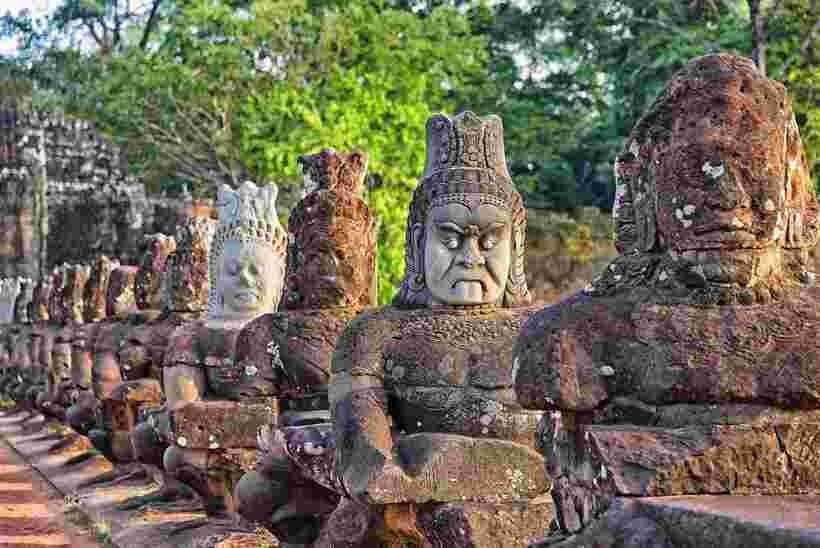
You walk along a causeway lined with statues of gods and demons. The causeway contains 108 mythical creatures, presented as guards to the city. This is a short walk, but it gives you a clear sense that Angkor Thom was planned as a ceremonial and defensive center, not simply a collection of temples.
The entrance is also a good example of why a guide helps. The statues are not random decoration. Their arrangement and symbolism connect to Khmer religious ideas and the design of the city. Ask your guide to explain the story behind the gods and demons if it is not covered naturally during the walk.
The vehicle transfer between sites keeps this section manageable, but you should still expect heat and uneven ground. The tour is not wheelchair accessible, and a moderate amount of walking is involved. It is also not suitable for unaccompanied minors or pregnant women.
Bayon and its 200 stone faces
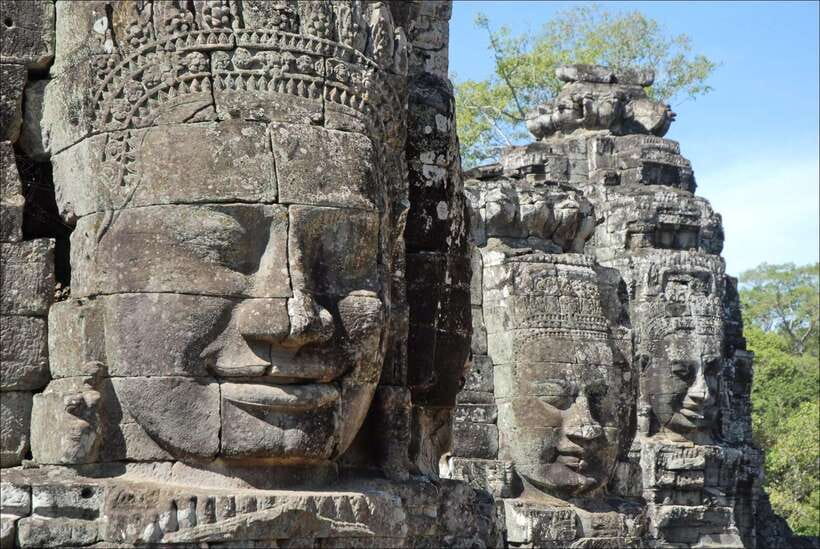
Inside Angkor Thom, Bayon is the visual shock of the day. More than 200 large faces look out from 54 towers, traditionally linked to the 54 provinces of the Khmer Empire at the time.
The faces create a different mood from Angkor Wat. Angkor Wat feels broad, ordered, and grand. Bayon feels tighter and more enclosed, with towers and carved faces appearing at different heights as you move through the temple.
This is where a good guide can improve the visit. Your guide can explain how the temple fits into the rule of King Jayavarman VII and point out the faces among the towers. The visitor accounts supplied for this experience give particularly strong praise to the guides’ historical explanations. Chantorn was described as informative, while Phuy Phy was praised for both temple knowledge and photography.
If you want good pictures, tell the guide what kind of photos you prefer. One guide, Phuy Phy, was specifically praised for taking high-quality phone photos. That will depend on your assigned guide, but it shows the kind of practical help that can make a small-group outing feel personal.
Bayon can be visually busy, so do not rush through it. Look up, then step back and study how the faces are placed around the towers. The guide’s explanations are most useful when paired with a few quiet minutes to simply look.
Same sky, a different way to spend the morning:
- Marrakech: Balloon Flight, Berber Breakfast & Certificate
★ 4.8 · 8,164 reviews - Cappadocia Hot Air Balloon Ride / Royal Balloon
★ 5.0 · 6,829 reviews - Marrakesh: Early Morning 40-Minute Balloon Flight
★ 4.8 · 6,533 reviews - Balloon flight + Breakfast in cave + Pyramids + Pick up CDMX.
★ 5.0 · 6,335 reviews
The Elephant Terrace and Terrace of the Leper King
The route continues to the Elephant Terrace and the Terrace of the Leper King. These stops are shorter than Angkor Wat or Ta Prohm, but they add important pieces to the picture of Angkor Thom.
The Elephant Terrace is known for its carved elephant motifs and its role as part of the royal city. The Terrace of the Leper King adds another sculptural wall and another chance to see how much detail was built into Angkor’s public spaces.
Do not expect a long standalone visit at each terrace. They are part of the Angkor Thom section, and the value comes from seeing them in relation to the city, gates, causeways, and Bayon. Your guide can give you the historical frame while you examine the carvings at close range.
This portion also breaks up the larger temple interiors. If your interest is mainly photography, the terraces provide a change from towers and corridors. If your interest is history, they help show how the city functioned as a royal center.
Ta Prohm and the trees taking back the temple
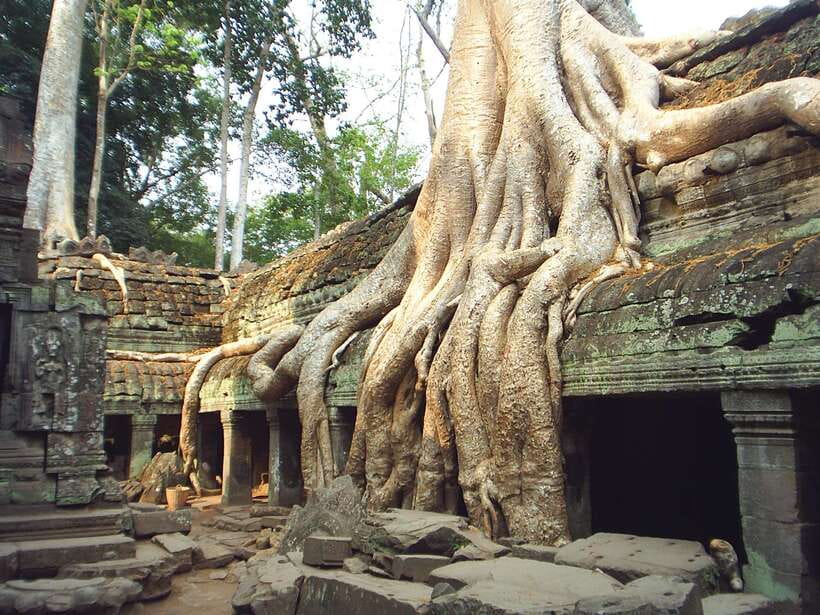
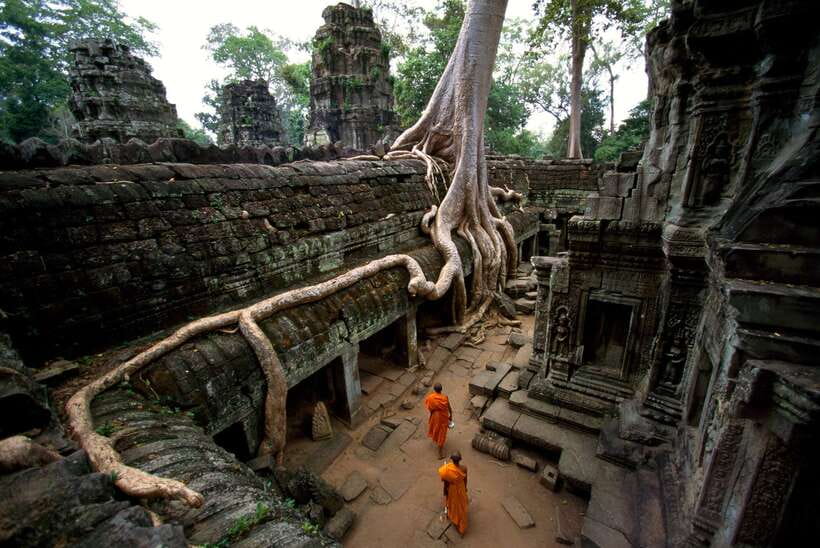
Ta Prohm is the afternoon finale, and it has a very different character from the other sites. Built in AD 1186 by King Jayavarman VII, the temple is famous for trees growing over and around the stonework.
The roots and trunks appear to grip the walls and chambers. That visual contrast is the reason Ta Prohm is so popular, but the trees are not the only attraction. Look for the carved doorways, galleries, and worn stone details that remain beneath the vegetation.
I like that Ta Prohm comes later in the route. After the ordered grandeur of Angkor Wat and the repeated faces of Bayon, this temple feels less formal and more dramatic. It also gives you some of the clearest photographs of nature and architecture occupying the same space.
The same practical warnings apply here: uneven surfaces, heat, and a fair amount of walking. Stay aware of your footing while looking up at the trees. Comfortable shoes are one of the few items that can make the entire day noticeably easier.
The tethered balloon: unusual views, uncertain timing
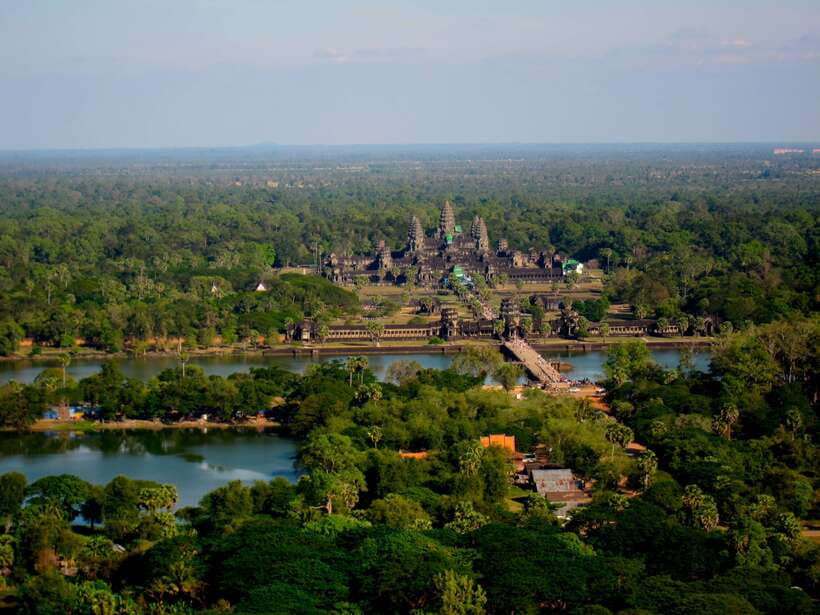
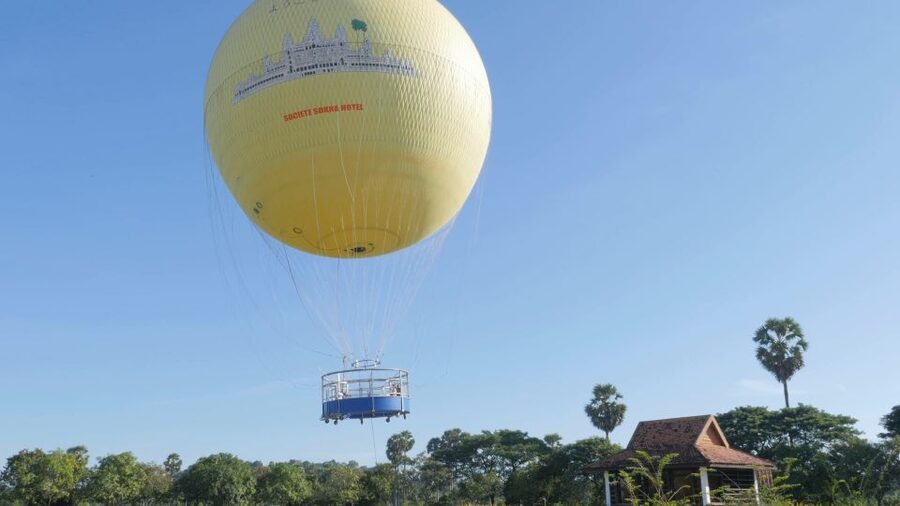
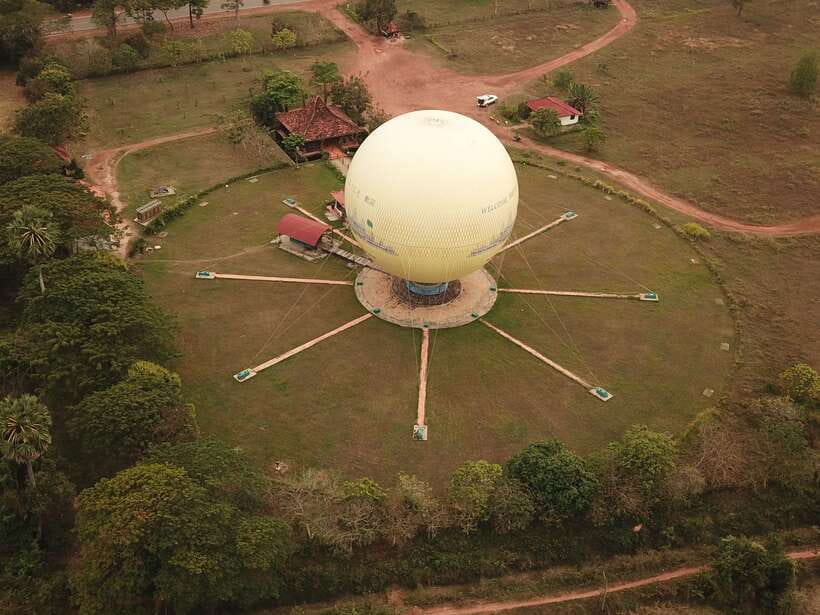
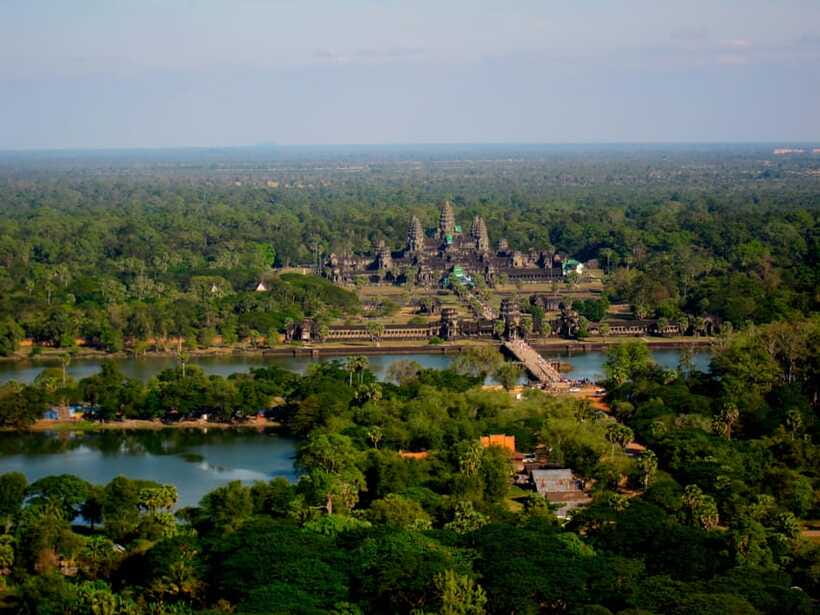
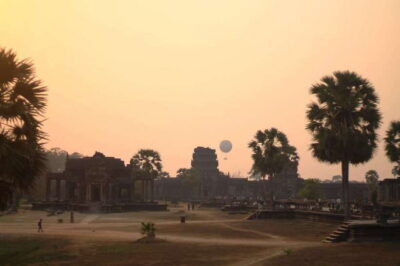
The balloon ride is the tour’s unusual extra. It is a tethered helium balloon, not a free-floating flight, and the ride lasts about 10 minutes. It can rise roughly 200 meters above the site, offering views toward Angkor Wat and the surrounding national park.
The ride is covered by insurance, which may reassure anyone unsure about trying it. The view should give you a broader sense of the temple area than you get from ground level, especially after spending hours among walls, towers, and trees.
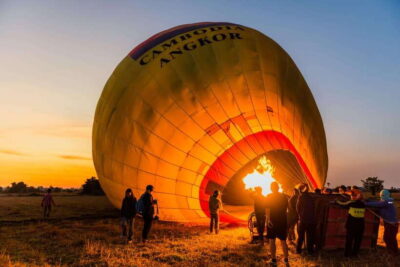
Do not book this tour on the assumption that the balloon is guaranteed. Weather controls the operation. The ride may take place at any time between 6 AM and 5 PM according to conditions, and the planned sunset view is available only when weather allows. Cloud, wind, or operating conditions can change the timing or prevent the ride.
That uncertainty is not a flaw in the tour operator’s control, but it is important when judging the price. The balloon is a bonus, not the core reason to visit Angkor. The temples and guide should still make the day worthwhile if the ride does not operate.
Khmer lunch and the shared vehicle
A Khmer set-menu lunch is included, which simplifies the middle of a long day. Drinks during lunch are not included, but cold bottled water is supplied during the tour.
Because the tour uses a shared air-conditioned car, van, or bus, you are not arranging separate transport between each temple. This is useful in the heat and helps the seven-hour schedule work. Hotel pickup and drop-off are included for hotels in the city center.
The exact pickup instructions need attention. The activity information gives an approximate 8 AM pickup and also says the tour departure is 8:30 AM, with a request to be ready by 7:30 AM. The safest approach is to be ready early and leave time for the ticket office before entering the park.
The tour concludes with a return to your city hotel. Personal expenses and lunch drinks are extra, so carry some spending money if you want anything beyond the included meal and water.
Is $111 a fair price?
The headline price is $111 per person, but the real cost is higher once you add the $37 Angkor Pass. That makes the total roughly $148 per person before lunch drinks or personal spending.
That is not the cheapest way to see Angkor. You are paying for convenience, an English-speaking local guide, shared air-conditioned transport, a Khmer meal, bottled water, and the balloon ride. If you want a driver and guide to organize the full day, the package is easier than arranging each part separately.
The value improves if your departure is very small. A one-person booking has previously operated with a guide and driver, creating a private-tour feel at the listed price. You cannot count on that, but the small-group format may offer more room for questions than a large coach outing.
The value is weaker if you mainly want independent temple time or are certain you will skip the balloon. In that case, you may prefer a simpler temple transport arrangement, though that option would not include this tour’s guide, lunch, or planned route.
I would judge the price by your priorities. For a first visit, a guide-led day with the main Angkor sights and an extra aerial viewpoint can be convenient. For repeat visitors who already know the temples, the fixed route and added cost may feel less attractive.
Who should book this Angkor tour?
I would recommend it to first-time visitors who want the major temples explained in one organized day. It suits you if you value history, prefer not to negotiate transport, and like having lunch and water included.
It is also a good fit for solo visitors. The small-group setup can make it easier to meet other people, while the possibility of a very small departure means you may receive plenty of direct attention. The Japanese participant who joined alone received careful assistance, which points to a welcoming approach for solo bookings.
Families with children may appreciate the vehicle transfers, but children must be accompanied by an adult, and the walking can be tiring. Anyone with mobility limitations should look elsewhere because the tour is not wheelchair accessible and includes uneven temple paths.
Bring comfortable shoes, sunglasses, a hat, and sunscreen. Leave drones and food for elsewhere, since neither is allowed under the stated rules, and food may not be eaten in the vehicle.
Should you book it?
Book this tour if you want Angkor Wat, Angkor Thom, Bayon, and Ta Prohm covered with clear English explanations, a Khmer lunch, and a chance at a balloon ride. The strongest reason to choose it is the guide-led experience, with past guides such as Chou, Nak Chum, Chantorn, and Phuy Phy praised for history, care, and photography help.
Think twice if $111 already feels high, because the Angkor Pass costs another $37 and the balloon is not guaranteed. If you accept that added cost and weather risk, this is a well-organized first-day introduction to Angkor, with enough variety to keep the seven hours moving.
FAQ
Is the Angkor Pass included in the tour price?
No. You buy the Angkor Pass at the ticket office, and the stated entrance fee is $37 per person.
How long does the tour last?
The tour lasts about seven hours, including hotel pickup, temple visits, lunch, transportation, and the return to your city hotel.
Is the balloon ride guaranteed?
No. The tethered helium balloon ride depends on weather conditions. It lasts about 10 minutes and may operate at any time between 6 AM and 5 PM.
What temples and monuments are visited?
The route includes Angkor Wat, Angkor Thom, Bayon Temple, the Terrace of the Elephants, the Terrace of the Leper King, and Ta Prohm.
What clothing should I wear?
Wear pants or a knee-length skirt or dress, with covered shoulders. Shorts and sleeveless shirts are not permitted.
Is hotel pickup included?
Yes. Pickup and drop-off are included for hotels within the city center. You should be ready early because the stated pickup and departure times may vary slightly.
Just added around the world
- Hot Air Balloon Ride With Gourmet Breakfast and Falcon Show★ 5.0 · 4 reviews
- Hot Air Balloon Dubai Exotic Sunrise With Buffet Breakfast★ 5.0 · 56 reviews
- Hot Air Balloon Flight in Dubai with Breakfast, Falconry and Camel Ride★ 5.0 · 3 reviews
- Hot air Balloon With 1957 Vintage Land Rover★ 5.0 · 6 reviews
- Hot Air Balloon Ride in Dubai★ 5.0 · 14 reviews
- Hot Air Balloon Ride With Gourmet Breakfast & Falcon Show★ 5.0 · 64 reviews
- Hot Air Balloon Ride in Dubai★ 5.0 · 4 reviews
- Dubai Hot Air Balloon Sunrise Sightseeing Ride★ 4.5 · 14 reviews
Siem Reap Hot Air Balloon Rides, compared.
Angkor Balloon Sunrise or Sunset ride and Pick up/Drop off
Read our review →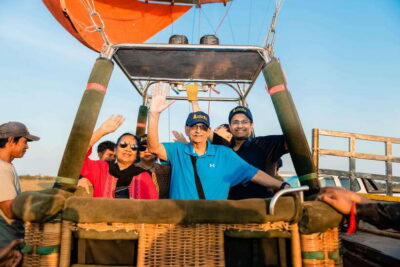
From Krong Siem Reap: Angkor Hot Air Balloon Ride w/ Pickup
Read our review →Browse the lists this tour appears in