
Review · LUXOR
Hot Air balloon w-guided tour toValley of the Kings king tut tom
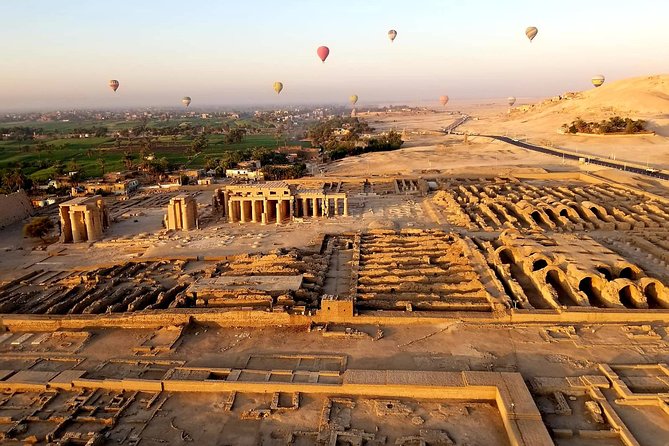
Luxor is most magical just before the day gets hot. This tour begins at 5:30 a.m. with a hot-air balloon flight over the West Bank, followed by royal tombs in the Valley of the Kings and a stop at the Colossi of Memnon. From above, the ancient monuments of Thebes spread out below you, giving you a useful sense of how the Nile, farmland, desert, and tombs fit together.
I like the combination of quiet aerial views and close-up archaeology. I also like that a certified Egyptologist guide travels with you, since the tomb paintings make far more sense when someone explains the gods, burial rituals, and royal symbols. The main drawback is the early start, plus some uncertainty over entrance fees: the tour information says they are included in one place, but also lists them as excluded elsewhere. Confirm this before paying.
Key points to know before booking
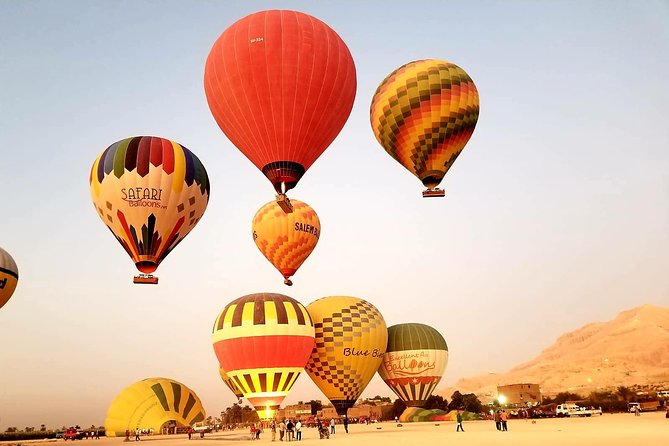
- The day begins before sunrise: Hotel pickup is scheduled for 5:30 a.m., with the balloon flight lasting about 50 minutes.
- You see King Tut’s royal mummy: The tomb visit gives you a chance to see Tutankhamun’s mummy in the Valley of the Kings.
- Several famous tombs are included: The planned visits cover the tombs of Ramses III, Merenptah, Ramses IV, and Tutankhamun.
- A private-style guided format adds context: The experience includes an Egyptologist guide and an air-conditioned vehicle, with a maximum group size of 20.
- The $100 price covers the major framework: Hotel pickup and drop-off, transport, guiding, and the balloon experience are part of the package, but entrance-fee wording needs clarification.
- The itinerary needs checking: The title and overview mention Karnak and East Bank sights, but the detailed route focuses on the balloon ride and Luxor’s West Bank.
Why the sunrise balloon flight is worth the early alarm
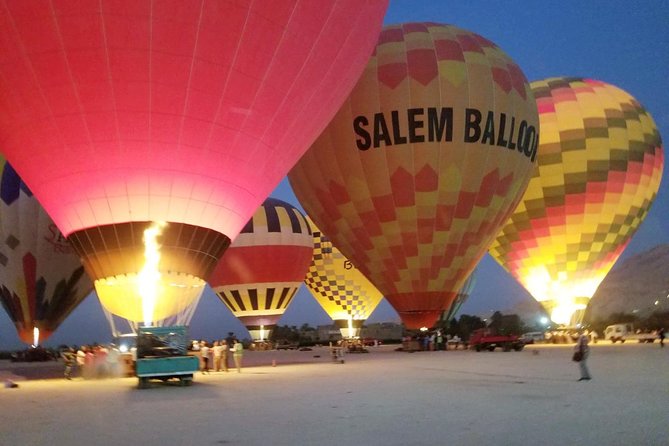
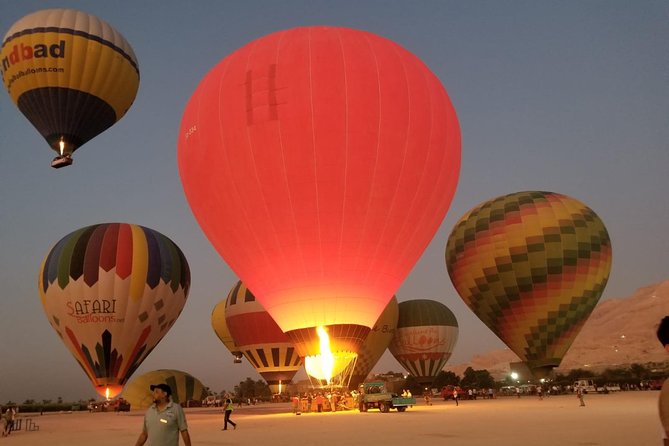
The balloon launch is the most unusual part of the day. You are picked up from your Luxor hotel in the early morning and taken to the West Bank, where the crew prepares the brightly colored balloon. Before takeoff, the pilot gives a safety briefing.
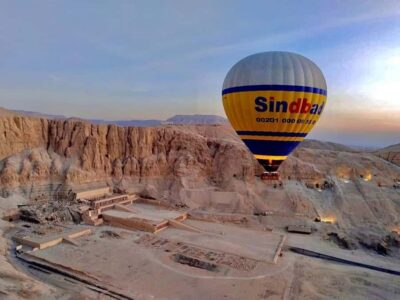
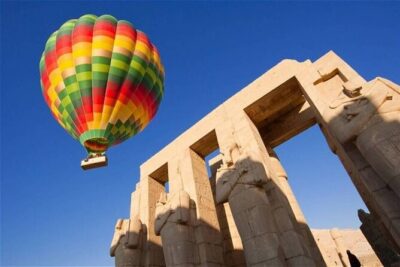
The flight lasts about 50 minutes. That is long enough to see Luxor from a new angle without turning the morning into an all-day balloon outing. As you drift over the West Bank, you can look down toward ancient monuments of Thebes, the modern city, and the Nile valley. The pilot is also expected to point out sights and explain what you are seeing.
A balloon flight is quiet in a way that a road tour is not. You are not moving from one monument entrance to the next. You are looking at the whole area at once. The desert hills, royal tomb zone, and cultivated land beside the Nile become easier to understand from the air.
Bring a camera, but keep your expectations practical. The flight depends on weather, and the balloon is not guaranteed to operate in poor conditions. If weather forces cancellation, the stated policy offers either another date or a full refund. Since the booking itself is otherwise non-refundable and cannot be changed, weather is an important factor when choosing your date.
A few more balloon flights around Luxor worth a look
- Package deal Hot Air Balloon Ride & Full Day Luxor Tour w/Guide Lunch
★ 5.0 · 82 reviews - Guided Hot Air Balloon Tour in Luxor
★ 4.5 · 39 reviews - Guided Hot Air Balloon Tour in Luxor
★ 5.0 · 8 reviews
Entering the Valley of the Kings
After the flight, the tour moves to the Valley of the Kings, the royal necropolis on Luxor’s West Bank. This is where the ancient kings of the New Kingdom were buried in rock-cut tombs rather than in large pyramids.
The route is designed to cover several tombs, including those of Ramses III, Merenptah, Ramses IV, and Tutankhamun. The exact order may change. One useful feature of a guided private tour is that the guide can rearrange the sequence if the group is tired. A family traveling with guides Ragab and driver Ramadan found that flexibility especially helpful, with the order changed to match the group’s energy.
You should expect heat, uneven ground, and a fair amount of walking. The tour is not just a quick photo stop. The Valley of the Kings works best when you slow down long enough to study the painted walls and ceilings. Your guide can explain why the corridors descend, how the royal burial chambers were decorated, and how the ancient Egyptians prepared a king for the afterlife.
The tour information says that four royal tombs are visited, but it separately lists the tombs of Tutankhamun, Ramses III, Merenptah, and Ramses IV. That gives you a clear sense of the intended focus. Ask your guide which tombs are open on the day, since Valley of the Kings access can vary.
King Tutankhamun’s tomb and the royal mummy
Tutankhamun’s tomb is the emotional center of the morning. The young king came to the throne at about 10 years old and died at about 19. His tomb became famous because Howard Carter discovered it in 1922 with much of its burial equipment still inside.
The famous golden mask is not here. It is displayed at the Egyptian Museum in Cairo. What you can see in Luxor is Tutankhamun’s royal mummy, located inside his tomb. That makes the stop more personal than simply viewing a famous object behind glass.
The tomb itself is not the largest in the valley, and it is not known for having the grandest painted chambers. Its importance comes from the story of the discovery and the chance to see the actual burial place of the young pharaoh. Your guide can help connect the small tomb to the enormous worldwide interest in Tutankhamun.
The planned visit lasts about 30 minutes. That is enough time to see the mummy and hear the main story, but you should not expect a long, unhurried museum visit. If Tutankhamun is your chief reason for booking, confirm that the additional entrance charge for his tomb is covered. The supplied information gives conflicting details about entrance fees.
The painted chambers of Ramses III
The tomb of Ramses III, known as KV 11, offers a different experience from Tutankhamun’s tomb. Its corridors carry colorful scenes from religious texts, including the Litany of Ra and the Book of Gates. Ramses appears before the gods, as you would expect in a royal burial place.
The unusual feature is the presence of secular scenes in small side chambers. These show foreign tribute, Aegean pottery, boats, weapons, and royal equipment. One chamber shows blind harpists, giving the tomb one of its alternative names, the Tomb of the Harpers.
This stop is particularly good for visitors who want to look beyond famous names. The pictures are not merely decoration. They show the king’s relationship with the gods, the goods brought from foreign lands, and the role of music and ritual in the afterlife.
The planned time here is about 25 minutes. That is a reasonable introduction, but the tomb has enough detail to reward a longer visit. Stay close to your guide at first, then use any spare moments to look at the colors and figures yourself.
Same sky, a different way to spend the morning:
- Hot Air Balloon Ride in Luxor Egypt with Transfers Included
★ 5.0 · 4,319 reviews - Luxor: Hot Air Balloon Ride over Luxor Relics
★ 4.8 · 1,681 reviews - Hurghada: 2-Day Luxor Tour with Hotel, Balloon, & Boat Ride
★ 4.5 · 1,113 reviews - Luxury Sunrise Balloon Ride in Luxor with Hotel Pickup
★ 5.0 · 1,104 reviews
Merenptah’s large corridors and changing tomb design
Merenptah was the son of Ramses II and Queen Isis-Nofret. His tomb, designated KV 8, is another useful stop because it shows how royal tomb design changed over time.
The tomb has fewer side rooms than some earlier examples, but its corridors and chambers are notably high. The layout also differs from the earlier jogged-axis design used in the Valley. These changes are easy to miss without explanation, so this is one of the places where an Egyptologist guide adds real value.
The tomb was discovered by Howard Carter in 1903, long before his famous discovery of Tutankhamun’s burial place. Its decoration and scale help place Merenptah within the long line of rulers who used the valley.
The scheduled stop lasts about 25 minutes. That makes it a focused visit rather than an exhaustive study. If you enjoy architecture, ask your guide to point out how the height, corridors, and room arrangement differ from the other tombs.
Ramses IV and the ceiling goddess Nut
Ramses IV’s tomb is noted for its color and fine detail. One of its best features is the ceiling over the sarcophagus, where the goddess Nut stretches across the space. In ancient Egyptian belief, Nut was closely tied to the sky and the king’s journey after death.
The sarcophagus is one of the largest in the Valley of the Kings. Some of the paintings have deteriorated, but the tomb remains one of the more decorated stops on the route. Look up as much as you look at the walls. The ceiling is easy to miss if you focus only on the corridor ahead.
Again, the listed visit lasts about 25 minutes. That can feel brief in a tomb where the ceiling alone deserves several minutes of attention. A good guide should help you identify the most important scenes quickly.
The Colossi of Memnon after the tombs
The last major stop is the Colossi of Memnon, two enormous seated statues from the reign of Amenhotep III. They once marked the entrance to a large temple complex, though the temple itself is no longer preserved in the same form.
Amenhotep III was the father of Akhenaten and the grandfather of Tutankhamun. That family connection gives the statues a useful place in the wider story of Egypt’s 18th Dynasty. After seeing Tut’s tomb and the royal burial grounds, you get a reminder that these kings also built huge monuments for public display.
The stop is planned for about 25 minutes. That is enough time to walk around, study the scale of the statues, and take photographs. The Colossi are beside the road, so this is not another long archaeological walk. It makes a sensible final stop before the ride back to your hotel.
What the $100 price really gets you
At $100 per person, the value depends on what is included on your booking confirmation. The package clearly includes hotel pickup and drop-off, an air-conditioned vehicle, a tour guide, and a guided visit to the Valley of the Kings. The balloon ride is the central feature, and the planned route covers several important West Bank sights.
The guide can also make the price worthwhile. Names connected with the tour include Ragab, Garap, and Mansour Hussain. Mansour is described as having completed a four-year Egyptology and tour-guide program. Ragab and driver Ramadan are also associated with a flexible, family-friendly day. You may not receive one of these specific guides, but the information gives you an idea of the experience’s intended guiding standard.
There is one point you must settle before booking. The overview says entrance fees are included, while the detailed inclusions list entrance fees under what is not included. Each stop also says admission is not included. Treat the $100 price as excluding entrance fees unless the operator confirms otherwise in writing.
Gratuities for the guide and driver are not included. The group size can reach 20 people, although the tour is described as private in parts of the information. Ask whether your booking is fully private or a small group with a maximum of 20. That distinction matters if you want flexible timing.
Timing, transport, and the early start
The day begins at 5:30 a.m. That early pickup is not a minor detail. You need to be ready before sunrise, and the first part of the experience is built around morning balloon conditions and light.
Transport is provided in an air-conditioned vehicle, with pickup and drop-off at your Luxor hotel. After the balloon flight and West Bank visits, you are returned to your hotel. The total duration is listed as about five hours, although the actual timing can change with balloon operations, road conditions, and the pace of the group.
The early schedule has a clear benefit: you see the West Bank before the strongest heat of the day. The tradeoff is that the morning packs a lot into a short period. Balloon flight, four tomb visits, Tutankhamun’s tomb, and the Colossi of Memnon leave little room for lingering.
Most people can take part, according to the supplied activity information. Still, you should be comfortable with walking and entering tombs. The tour includes a maximum of 20 people, so the guide may need to keep the group moving.
A note about Karnak and the East Bank
The title and overview refer to Karnak Temple and East Bank sights such as the Avenue of Sphinxes, the Hypostyle Hall, obelisks, the Temple of Amon, the granite scarab of Amenophis III, and the Sacred Lake. Those are important Luxor attractions, but the detailed stop-by-stop route provided here lists the balloon launch, Valley of the Kings, Tutankhamun’s tomb, three other royal tombs, and the Colossi of Memnon.
That is a meaningful difference. If Karnak is your main goal, do not assume it is part of this five-hour experience. Ask the operator to confirm the final route before booking. You may need a separate Karnak visit or a different Luxor tour.
Who should book this experience
I would choose this tour if you want a strong first look at Luxor’s West Bank and like the idea of seeing the monuments from above before entering them. It suits couples, families, and first-time visitors who prefer a guide to explain the tombs rather than simply being dropped at the entrance.
It is also a good match for anyone especially interested in Tutankhamun. You see the Valley of the Kings, enter his tomb, and stand near his mummy, while also comparing his burial place with those of Ramses III, Merenptah, and Ramses IV.
I would think twice if you dislike early mornings, want a slow archaeological study, or are booking mainly to see Karnak. The schedule is compact, and the East Bank material in the overview does not match the detailed West Bank program.
Should you book it?
Book this experience if the balloon flight is your priority and you want it paired with the Valley of the Kings in one organized morning. The combination is efficient, visually memorable, and made stronger by an Egyptologist guide.
Before you commit, confirm three things: the exact guide, the final route, and whether entrance fees are included. If those details are clear and you are ready for a 5:30 a.m. start, the $100 price can offer solid value for transport, guiding, the balloon flight, and several major West Bank sights.
FAQ
What time does the tour start?
The stated start time is 5:30 a.m. Hotel pickup is offered from Luxor.
How long does the experience last?
The total duration is approximately five hours.
How long is the hot-air balloon flight?
The balloon flight is listed as approximately 50 minutes.
What can I see from the balloon?
The flight provides views over Luxor’s West Bank and many of the ancient monuments of Thebes. The pilot identifies sights and points of interest during the flight.
Is King Tutankhamun’s tomb included?
Yes. The planned route includes Tutankhamun’s tomb, where you can see the young king’s royal mummy.
Which other tombs are included?
The detailed route lists the tombs of Ramses III, Merenptah, and Ramses IV, along with Tutankhamun’s tomb.
Is transportation included?
Yes. The experience includes hotel pickup and drop-off and transport in an air-conditioned vehicle.
Are entrance fees included in the price?
The supplied tour information is inconsistent. One section says entrance fees are included, while another lists them as excluded and each stop says admission is not included. Confirm this directly before booking.
Can the tour be canceled or changed?
The experience is described as non-refundable and cannot be changed for any reason. If poor weather causes cancellation, you are offered a different date or a full refund.
Just added around Luxor
- Hot Air Balloon Ride and Tour to Valley of Kings Luxor- Special Offer★ 5.0 · 15 reviews
- Hot Air Balloon trips in Luxor★ 5.0 · 3 reviews
- Amazing Luxor hot air balloon and tour to valley of the kings.Special offer★ 5.0 · 3 reviews
- Hot Air Balloon Flight in Luxor with Pickup★ 4.5 · 14 reviews
- Luxor Tours: City Tour,Hot Air Balloon,Kings Valley,Sailing Felucca,Camel Ride★ 4.5 · 19 reviews
- east & west bank of luxor with balloon trip★ 5.0 · 9 reviews
- Enjoy The hot Air Balloon,Kings Valley,Sailing Felucca,Camel Ride in Luxor★ 5.0 · 6 reviews
- Balloon Ride Luxor Egypt★ 5.0 · 68 reviews
Luxor Hot Air Balloon Rides, compared.

Hot Air Balloon Ride in Luxor Egypt with Transfers Included
Read our review →
2-Day Luxor Tour with Hotel, Balloon, & Boat Ride
Read our review →
Luxury Sunrise Balloon Ride in Luxor with Hotel Pickup
Read our review →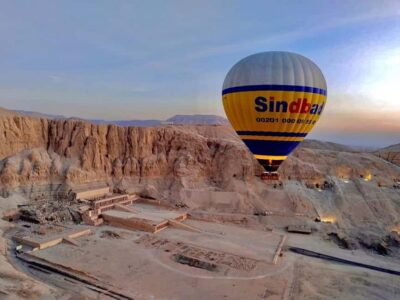
Sunrise Hot Air Balloon Over the Historical sites in Luxor
Read our review →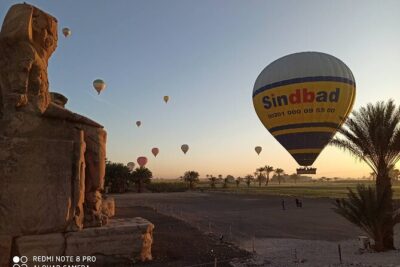

Sunrise Ballooning Luxor with Transfers Included
Read our review →Browse the lists this tour appears in