Review · ASWAN
Nile cruise- Aswan to Luxor with Abu Simbel and Hot air balloon
The great appeal here is the way the journey links Egypt’s major Nile sights in one moving trip. You begin beside the Aswan High Dam, sail past river islands and villages, visit Abu Simbel, then finish among the temples and tombs of Luxor. It is a lot of ancient Egypt in four days, but the ship gives you a calm base between visits.
I like the private format, since your group travels with its own guide rather than being folded into a large party. I also like the mix of transport: motorboat to Philae, felucca in Aswan, horse and carriage at Edfu, the cruise itself, and a hot-air balloon over Luxor. The main caution is the pace. Abu Simbel adds a long eight-hour excursion, and several days begin early or include multiple major sites.
Key points to know before booking
- Abu Simbel is built into the trip, with a private visit included rather than left as an optional extra.
- The sailing route covers Aswan to Luxor, with stops at Kom Ombo and Edfu along the way.
- A hot-air balloon ride over Luxor gives you a very different view of the Nile and ancient monuments.
- Three meals a day are included for three days, along with the listed entrance fees and excursions.
- Several classic local rides are part of the plan, including a felucca, motorboat, horse and carriage, and air-conditioned transfers.
- The tour is private, with pickup and drop-off, a professional Egyptologist guide, and support on arrival and departure.
Why this Aswan to Luxor route works well
A Nile cruise is one of the easiest ways to understand how Egypt’s ancient cities fit together. Aswan feels more relaxed and river-focused. Luxor is denser, with major temples on the east bank and royal tombs on the west bank. Sailing between them lets you see both areas without arranging separate hotels and long road transfers.
At $1,325 per person, this is not a budget trip. The price makes more sense when you count what is bundled in: accommodation on the cruise, meals, private transport, an Egyptologist guide, entrance tickets, Abu Simbel, the balloon ride, and local boat and carriage rides. The value is strongest if you want a prepared itinerary and prefer not to negotiate separate transfers or tickets at each site.
You should still read the schedule as an active sightseeing trip, not a restful cruise holiday. The ship provides downtime, but the sightseeing days are full. The Abu Simbel outing is especially demanding, while the hot-air balloon ride requires an early start. In return, you see an unusually broad stretch of southern Egypt in a short period.
More Nile Cruise and Balloon Packages in Aswan
- 4-Days Nile Cruise From Aswan To Luxor including Abu Simbel and Hot Air Balloon
★ 5.0 · 3,142 reviews - 4-Day 3-Night Nile Cruise from Aswan to Luxor&Abu Simbel+Balloon
★ 5.0 · 2,023 reviews - 4-Day 3-Night Nile Cruise from Aswan to Luxor including Abu Simbel, Air Balloon
★ 4.5 · 612 reviews
Day one: the dam, Philae, and a quiet felucca sail
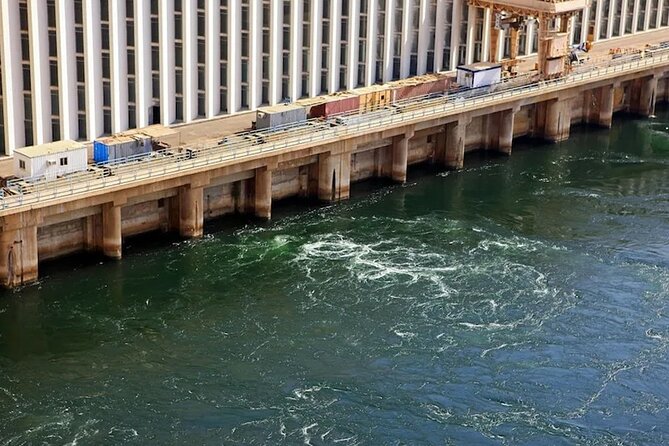
Your first stop is the Aswan High Dam, completed in 1970. This is not an ancient monument, but it helps explain modern Egypt. The dam produces hydroelectric power, controls Nile flooding, supports irrigation, and created Lake Nasser, one of the world’s largest artificial lakes.
I find this stop useful because it gives you a clear piece of modern context before the ancient sites begin. The visit lasts about an hour, and admission is included. The difficult side of the story is also important: construction displaced communities and changed local ecosystems. You are not simply looking at a large wall across the river. You are looking at a project that reshaped southern Egypt.
From there, a motorboat carries you to Philae Temple. The temple complex was dedicated mainly to Isis and combines ancient Egyptian and Greco-Roman design. Its island setting is part of the experience. Tall columns, carved reliefs, and open views across the water make Philae feel distinct from the large temple compounds farther north.
The visit lasts about two hours, with the entrance ticket included. Take time to look closely at the carvings rather than racing from one courtyard to the next. The temple’s location and rescue from rising water are central to its story, and the boat ride helps you understand why the site feels separate from Aswan itself.
The day ends with a felucca ride. These traditional sailboats move quietly across the Nile, passing Elephantine Island and offering views toward Kitchener Island’s Botanical Gardens. This is one of the gentler parts of the tour, and I would treat it as a chance to slow down after the first round of temples.
A felucca is also a good contrast to the cruise ship. You hear the wind and water rather than an engine, and the pace is naturally unhurried. The ride lasts about an hour and has no separate admission charge.
Day two: twin gods at Kom Ombo and Horus at Edfu
Kom Ombo is one of the most unusual temples on the route because it was dedicated to two gods: Sobek, the crocodile god, and Horus the Elder. The building is arranged almost like two temples joined together. You can see paired entrances, halls, and sanctuaries, with each side linked to its own deity.
That symmetry makes Kom Ombo easy to appreciate even if you are new to Egyptian temple design. The site sits beside a bend in the Nile, and the position gives you a good river view as you walk. Your ticket and guided visit are included, with about two hours set aside.
Afterward, you return to the ship for lunch on the sun deck. This is a useful rhythm: an active shore visit followed by food and open views instead of another immediate bus transfer. Three lunches, three breakfasts, and three dinners are included in the package, though the exact menus are not specified.
The ship then continues toward Edfu. The Temple of Horus is one of Egypt’s best-preserved ancient monuments, partly because desert sand covered it after the pagan cult was banned. Its roof remains intact, which gives the interior a darker, more enclosed feel than many open-air ruins.
The temple was built during the Ptolemaic period, from 237 to 57 BC, and is dedicated to Horus, the falcon god and son of Isis and Osiris. The entrance pylons and large carved walls are impressive, but I especially value the preserved interior. You can better imagine how a functioning temple might have felt when its chambers were roofed and used for ritual.
The listed visit lasts about two hours and includes admission. A horse-and-carriage ride is also included among the tour services. That can make the approach more memorable, but you should expect the day to feel full, particularly after the morning visit to Kom Ombo.
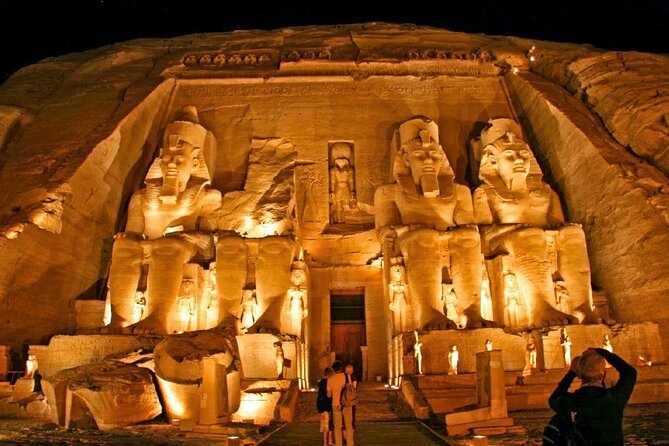
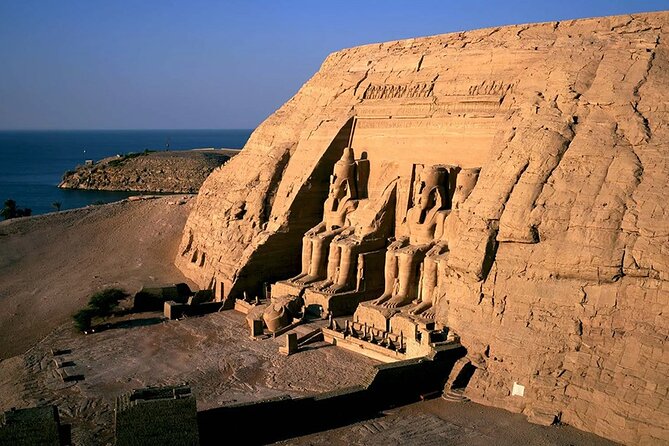
Abu Simbel is the major logistical challenge of this day. The excursion is listed at about eight hours, and the temple admission is included. Located in southern Egypt near the Sudanese border, Abu Simbel was built during the reign of Ramesses II in the 13th century BC.
The two temples are famous for their huge seated figures cut into the rock. The scale is the point, but do not let the facade distract you from the interior carvings and chambers. This is the sort of place where a good Egyptologist guide matters, since the monuments carry political, religious, and architectural meaning that is easy to miss when you are focused only on photographs.
The long Abu Simbel outing is the clearest reason to think carefully about your energy level. You gain one of Egypt’s great ancient sites, but you give up much of the relaxed feeling people often expect from a cruise. If Abu Simbel is high on your list, the trade is worthwhile. If you want a slow, ship-centered holiday, this schedule may feel intense.
Day three: Karnak and Luxor Temple after the sailing
Karnak is enormous, covering more than two square kilometers. The complex grew, changed, and expanded over roughly 1,500 years, with the Temple of Amun at its center. Your visit includes the open-air museum and lasts about two hours.
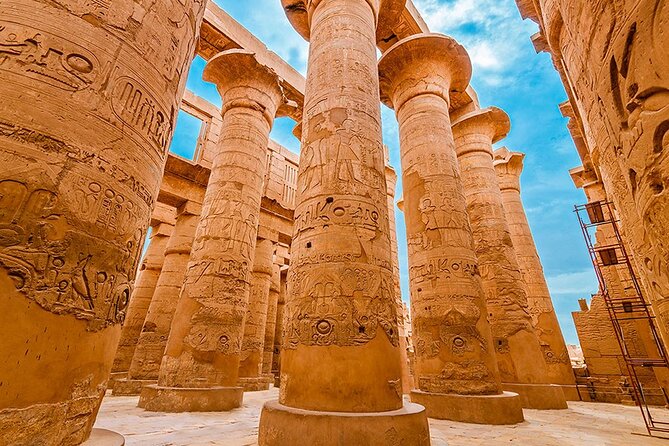
The famous hypostyle hall is the visual high point for many people. Its forest of columns shows how grand religious architecture could become, but Karnak rewards a slower look beyond the headline sight. Pylons, obelisks, sanctuaries, and carved surfaces reveal that this was not one building made at one time. It was a vast sacred center repeatedly altered by different rulers.
Because Karnak is so large, your guide’s explanations can help you avoid wandering without a sense of direction. Wear practical shoes and keep water close. The provided itinerary does not specify exact visiting times, so ask your guide about the day’s order and how long you will have in each area.
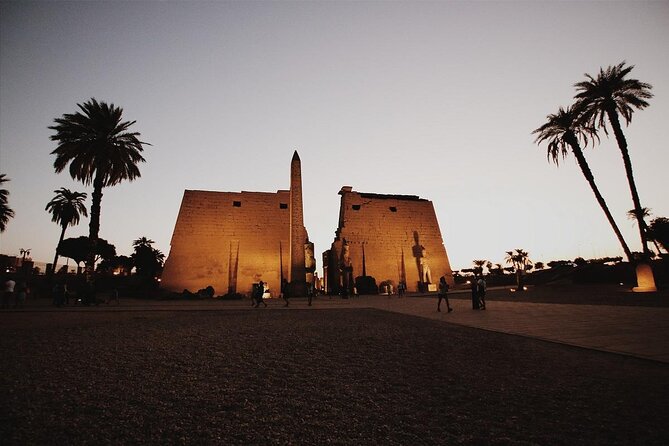
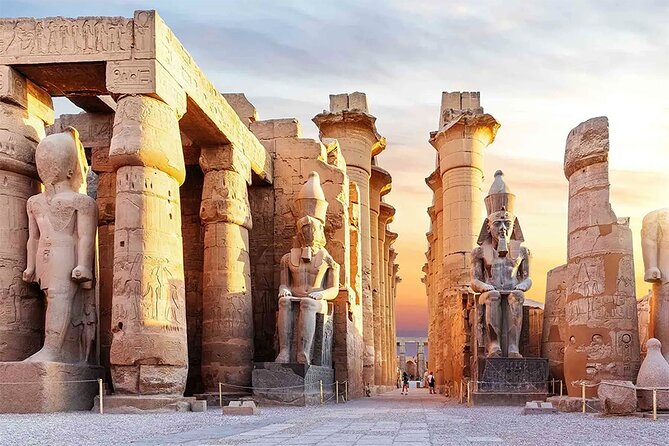
Luxor Temple is smaller and more compact than Karnak, but its position in the modern city gives it a different character. Built mainly by Amenhotep III and Ramesses II, it was connected with Karnak during the annual Opet festival. The temple served as the Southern Sanctuary, where the statues of Amun, Mut, and Khonsu were brought together.
The visit lasts about 90 minutes and includes admission. I like Luxor Temple because the columns, statues, and processional spaces are easier to read as a single composition. It can also be seen by day or after dark, when lighting changes the mood of the stone. The schedule does not promise a specific evening visit, so treat a night return as something to ask about rather than a guaranteed part of the program.
More Abu Simbel and Balloon Tours in Aswan:
- 4-Days Nile Cruise From Aswan To Luxor including Abu Simbel and Hot Air Balloon
★ 4.5 · 509 reviews - 4 Days Nile Cruise from Aswan to Luxor including Abu Simbel and Hot Air Balloon
★ 4.5 · 356 reviews - 4-Day 3-Night Nile Cruise from Aswan to Luxor With Balloon and Abu Simbel
★ 5.0 · 327 reviews - 4-Days Nile Cruise Aswan&Luxor,Hot Air Balloon&Abu Simbel.Hot deal
★ 5.0 · 322 reviews
Day four: royal tombs, Hatshepsut, and the balloon flight
The Valley of the Kings takes you to Luxor’s west bank, where New Kingdom rulers were buried between about 1550 and 1069 BC. Sixty-three tombs are known in the valley, though the visit does not mean every tomb is open at once. Entrance to the listed excursion is included, and about two hours are planned.
The painted chambers are the reason to come, but the valley’s fragile condition deserves respect. Carbon dioxide, humidity, and constant contact with the air affect ancient plaster and pigments. Follow your guide’s instructions, avoid touching surfaces, and do not assume that every famous tomb is part of the basic entry.
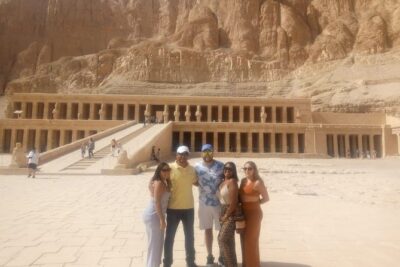
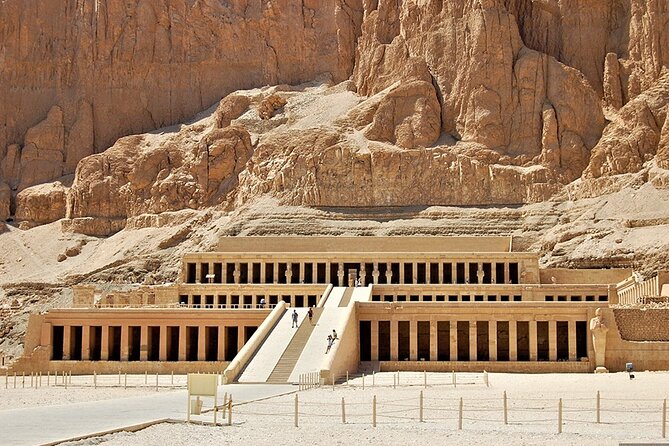
The Temple of Hatshepsut at Deir el Bahari is one of the most striking buildings in Luxor. Its terraces sit against steep limestone cliffs, creating a strong meeting of straight architectural lines and rugged rock. Much of what you see has been rebuilt, but the design remains remarkable.
Hatshepsut ruled as pharaoh from 1473 to 1458 BC, and the temple reflects her desire to present royal authority in a lasting form. The visit lasts about an hour. It is shorter than the Valley of the Kings, but the site often leaves a stronger visual impression because of its setting.
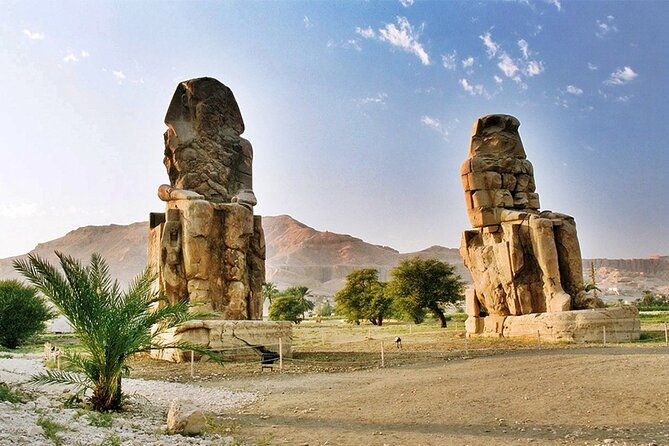
The Colossi of Memnon are a brief stop, about 15 minutes, but they are worth seeing. Each enormous seated figure was carved from a single block of stone and once guarded the entrance to the funerary temple of Amenhotep III. The statues are about 18 meters high, and excavation continues behind them.
Finally, the hot-air balloon ride offers a new view of Luxor. The flight lasts about 45 minutes and is included in the price. From above, you see the Nile, the temples, and the contrast between cultivated ground and the dry land beyond it.
The balloon ride is not just a scenic add-on. After several days of studying walls, tombs, and columns from ground level, the flight helps you understand how close the major sites are to the river and how sharply the settled strip ends. The exact flight conditions and departure arrangements are not provided, so confirm the pickup time and weather procedures with the operator.
Guides, transport, meals, and small practical issues
A professional Egyptologist guide is included, and the private format means the guide can respond to your group’s questions and pace. One useful part of the guiding service is help with tipping customs and practical suggestions. That kind of advice matters in Egypt, where small payments can otherwise become a source of confusion.
The tour includes an air-conditioned vehicle, hotel pickup and drop-off, meet-and-assist service on arrival and departure, and the listed Nile excursions. You also get a motorboat, felucca ride, and horse-and-carriage ride. These changes of transport keep the route interesting, though they also mean you should expect some coordination between ship, road, and shore visits.
The cruise ship was described as clean and pleasant, and the food received a favorable mention. There is one practical warning worth taking seriously: a shower drain problem caused water to flood the bathroom as far as the toilet. That may have been a cabin-specific issue, but it is sensible to report plumbing trouble promptly rather than waiting.
The tour can be booked with a mobile ticket, pickup is offered, and group discounts are available. Confirmation is received at booking. Most people can participate, and the activity is private, but the schedule still calls for walking, vehicle transfers, boat rides, and an early balloon outing.
Cancellation terms are strict close to departure. You can receive a full refund if you cancel at least six full days before the start time. A 50 percent refund applies for cancellations two to six full days ahead, while cancellations less than two full days before the start are not refunded.
Who should book this Nile cruise?
I would choose this trip if you want the main sights organized in one continuous route and you value a private guide. It suits first-time visitors who want Abu Simbel, the classic Nile temples, and Luxor’s west bank without arranging each piece separately.
It is also a strong fit if you enjoy variety. You are not confined to one bus or one type of sightseeing: there is sailing, temple walking, a carriage ride, a long Abu Simbel excursion, and a balloon flight.
I would hesitate if you want long afternoons on deck, flexible free time, or a slow pace. The itinerary packs in major sites, and Abu Simbel is a serious day out. The bathroom issue on the ship is another reason to keep expectations practical rather than treating the cruise as a luxury resort.
At $1,325 per person, the trip earns its price through the number of inclusions and the amount of planning it removes. Book it if the convenience of a private, guide-led route matters more to you than choosing every hotel, meal, and departure time yourself.
FAQ
How long is the Nile cruise from Aswan to Luxor?
The tour lasts approximately four days.
Where does the tour begin?
The tour begins in Aswan, Egypt.
Does the tour include Abu Simbel?
Yes. A private Abu Simbel visit is included, with about eight hours listed for the excursion.
Is a hot-air balloon ride included?
Yes. A hot-air balloon ride in Luxor is included, with a listed flight time of about 45 minutes.
Which major temples are visited?
The route includes Philae Temple, Kom Ombo Temple, the Temple of Horus at Edfu, Karnak, Luxor Temple, Abu Simbel, and the Temple of Hatshepsut.
Are meals included?
Yes. Breakfast, lunch, and dinner are included for three days, with three breakfasts, three lunches, and three dinners listed.
Is transportation included?
Yes. The tour includes an air-conditioned vehicle, hotel pickup and drop-off, a motorboat, a felucca ride, and a horse-and-carriage ride.
Is this a private tour?
Yes. Only your group participates, and a professional Egyptologist guide is included.
What is the cancellation policy?
A full refund is available when you cancel at least six full days before the start time. A 50 percent refund applies for cancellations two to six full days ahead. Cancellations less than two full days before the start are not refunded.
Just added around Aswan
- (3-Nights Cruise From Aswan To Luxor & Balloon, Abu Simbel)★ 4.5 · 23 reviews
- 4-Days Nile Cruise From Aswan To Luxor Abu Simbel and Air Balloon★ 4.5 · 2 reviews
- 4-Day Nile Cruise: Aswan to Luxor & Abu Simbel + Hot Air Balloon★ 4.5 · 35 reviews
- 8 Nights Egypt Tour,Cairo,Luxor,Aswan&Abu Simbel,Nile Cruise,Hot Air Balloon★ 4.5 · 11 reviews
- 3-Nights Cruise From Aswan To Luxor, Hot Air Balloon,Abu Simbel★ 4.5 · 46 reviews
- 4 Days Nile Cruise &Hot Air Balloon on M/S Movenpick Royal Lilly★ 5.0 · 4 reviews
- (Wonderful 3-Nights Nile Cruise from Aswan to Luxor & Balloon)★ 4.5 · 17 reviews
- Luxor: 4-Night Nile cruise , Hot Air balloon , west bank , abu simbel★ 5.0 · 3 reviews
Aswan Hot Air Balloon Rides, compared.
4-Days Nile Cruise From Aswan To Luxor including Abu Simbel and Hot Air Balloon
Read our review →
4-Day 3-Night Nile Cruise from Aswan to Luxor&Abu Simbel+Balloon
Read our review →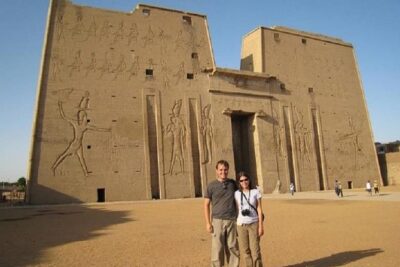
4-Day 3-Night Nile Cruise from Aswan to Luxor including Abu Simbel, Air Balloon
Read our review →
4-Days Nile Cruise From Aswan To Luxor including Abu Simbel and Hot Air Balloon
Read our review →4 Days Nile Cruise from Aswan to Luxor including Abu Simbel and Hot Air Balloon
Read our review →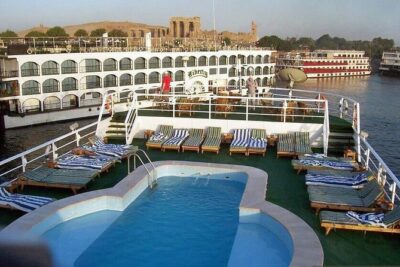
4-Day 3-Night Nile Cruise from Aswan to Luxor With Balloon and Abu Simbel
Read our review →